Friday, February 11, 2011

Fury over Egypt leader's refusal to leave deepens


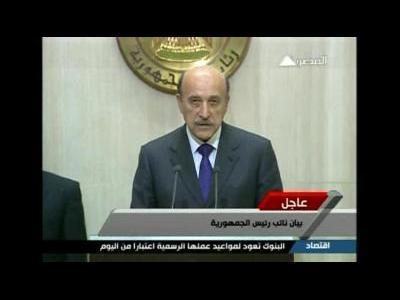
Mubarak transfers power to vice president Play Video AP – Mubarak transfers power to vice president

INSTANT VIEW - Egypt's Mubarak says will not step down Reuters – Egypt's President Hosni Mubarak addresses the nation in this still image taken from video February …

CAIRO – Protesters enraged by President Hosni Mubarak's latest refusal to step down promised massive demonstrations Friday — possibly including a march on the presidential palace — as they warned that Egypt could explode in violence and pleaded for the military to intervene.

Mubarak gave most of his powers to his vice president but refused to resign or leave the country late Thursday, hours after the military made moves that had all the markings of a coup. The military gave no immediate response following Mubarak's speech, and its position remained ambiguous.

"We are waiting for a strong reaction from the army to Mubarak's speech," said Mohammed Mustapha, a protest spokesman. He said "huge numbers" of protesters were expected Friday and that many wanted to march on the Oruba palace, the main presidential palace several miles (kilometers) away Cairo's Tahrir Square, where the protests have been concentrated.

By early Friday organizers had not made a formal call for such a march, but hundreds of protesters already had gathered outside the palace in the hours after Mubarak's speech, according to witnesses and TV reports. The residence where Mubarak normally stays when he is in Cairo is inside the palace, though it was not known if he was there.

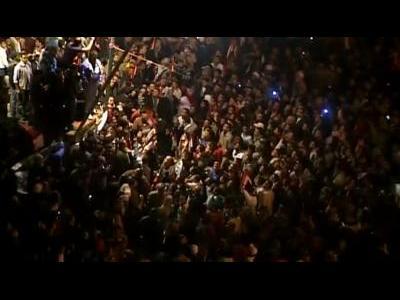
Several hundred thousand people had packed into Tahrir Square on Thursday, ecstatic with expectation that Mubarak would announce his resignation. Instead, they watched in shocked silence as he spoke, holding their foreheads in anger and disbelief. Some broke into tears. Others waved their shoes in the air in contempt. After the speech, they broke into chants of "Leave, leave, leave."

Around 2,000 protesters then marched on the state television headquarters several blocks away from Tahrir, guarded by the military with barbed wire and tanks. "They are the liars," the crowd shouted, pointing at the building, chanting, "We won't leave, they will leave."

Prominent reform advocate Mohamed ElBaradei, whose supporters were among the organizers of the 18-day-old wave of protests, warned in a Twitter message that "Egypt will explode."

"The army must save the country now," the Nobel Peace laureate said. "I call on the Egyptian army to immediately interfere to rescue Egypt. The credibility of the army is on the line."

Protesters' hopes that Mubarak would resign had been raised Thursday when a council of the military's top generals announced it had stepped in to secure the country, and a senior commander told protesters in Tahrir Square that all their demands would soon be met.

The military's Supreme Council, headed by Defense Minister Field Marshal Hussein Tantawi, announced on state TV that it was in permanent session, a status that it takes only in times of war. It said it was exploring "what measures and arrangements could be made to safeguard the nation, its achievements and the ambitions of its great people." That suggested Tantawi and his generals were in charge of the country.

The statement was labeled "Communique No. 1," language that also suggests a military coup.

State TV showed Tantawi chairing the council with around two dozen top stern-faced army officers seated around a table. Mubarak and Vice President Omar Suleiman, a former army general and intelligence chief named to his post after the protests erupted Jan. 25, were not present, the strongest indication during the day of a rift.

After Mubarak's announcement, the mood among protesters was a mix of fury, disappointment, determination to go on and a grim realism that they should have expected little else from him.

One activist, Waleed el-Korumi, said protesters planned peaceful marches, but he warned of chaos if the army does not intervene.

"This will push the country to the edge of the abyss," he said. "We will lay waste to our country if we march on the palace. It's a case of both sides sticking to their guns and at the end we will lose our nation."

In his address on state TV, Mubarak showed the strategy he has followed throughout the days of upheaval, trying to defuse the greatest challenge ever to his nearly three-decade authoritarian rule. So far, he has made a series of largely superficial concessions while resolutely sticking to his refusal to step down immediately or allow steps that would undermine the grip of his regime.

Looking frail but speaking in a determined voice, Mubarak spoke as if he were still in charge, saying he was "adamant to continue to shoulder my responsibility to protect the constitution and safeguard the interests of the people." He vowed that he would remain in the country and said he was addressing the youth in Tahrir as "the president of the republic."

Even after delegating authority to his vice president, Mubarak retains his powers to request constitutional amendments and dissolve parliament or the Cabinet. The constitution allows the president to transfer his other authorities if he is unable to carry out his duties "due to any temporary obstacle."

"I saw fit to delegate the authorities of the president to the vice president, as dictated in the constitution," he said.

President Barack Obama appeared dismayed by Mubarak's announcement. He said in a statement that it was not clear that an "immediate, meaningful" transition to democracy was taking place and warned that too many Egyptians are not convinced that the government is serious about making genuine change.

Suleiman was already leading the regime's efforts to deal with the crisis, though he has failed to ease the protests, which have only escalated in size and ambition, drawing crowds of up to a quarter-million people. In the past 48 hours they have spiraled even further out of control, with labor protests erupting around the country and riots breaking out as impoverished Egyptians attacked and set fire to several police and governor headquarters in cities outside Cairo.

Mubarak insisted on the continuation of a government-dominated process for reform that Suleiman drew up and that protesters have roundly rejected because they fear it will mean only cosmetic change and not real democracy. Under that system, a panel of judges and lawyers put together by Suleiman recommends constitutional changes, while a separate panel monitors to ensure that state promises are carried out.

Suleiman has also offered dialogue with the protesters and opposition over the nature of reforms. He has not explained how the negotiations fit in if the judges panel, which is led by Mubarak supporters, is recommending amendments. In any case, the protesters and opposition have resolutely refused talks until Mubarak goes.

Mubarak called the protesters' demands legitimate and promised that September presidential elections — in which he says he will not run — will be "free and fair" with supervision to ensure transparency.

He said that on the recommendation of the panel, he had requested the amendment of five articles of the constitution to loosen the now restrictive conditions on who can run for president, to restore judicial supervision of elections, and to impose term limits on the presidency.

He also annulled a constitutional article that gives the president the right to order a military trial for civilians accused of terrorism. He said that step would "clear the way" for eventually scrapping a hated emergency law but with a major caveat — "once security and stability are restored."

The emergency law, imposed when Mubarak came to power in 1981, gives police virtually unlimited powers of arrest.

Before the night's dramatic developments, protests had gained a spiraling momentum. Protesters had been gearing up for even more massive demonstrations on Friday, when they planned to march from squares around Cairo into Tahrir.

After the speech, some protesters drifted out of Tahrir, tears of disappointment and anger in their eyes. But the majority of the crowd remained, camping through the night and vowing to continue their campaign.

Muhammed Abdul Rahman, a 26-year-old lawyer who had joined the protesters for the first time Thursday called Mubarak's speech a "provocation."

"This is going to bring people together more, and people will come out in greater numbers," he said.

___

Associated Press writers Maggie Michael, Hadeel al-Shalchi, Paul Schemm, Lee Keath and Marjorie Olster contributed to this report.

http://news.yahoo.com/s/ap/ml_egypt

Mujahid Yusof: Petunjuk dari kebangkitan di Mesir


Mujahid Yusof

Saya tidak berapa perasan mulanya berlaku kebangkitan rakyat di Tunisia. Ketika saya berada di Melaka pada 15 January lalu saya bertemu dengan seorang guru lelaki dari Mesir yang mengajar di Sekolah Islam Ar Rahmah Solok Gaung. Isterinya orang Malaysia dari Terengganu.

Sebenarnya pagi itu setelah kuliah Subuh di Bukit Katil saya diajak oleh Hj Mat Diah pengasas sekolah untuk meninjau-ninjau perkembangan pembangunan sekolah sambil mempelawa sarapan pagi di rumahnya. Saya mempunyai hubungan yang baik dengan sekolah Ar Rahmah kerana anak-anak saya adalah bekas penuntut di situ dari sekolah rendah lagi.

Semasa bertemu dengan lelaki Arab dari Mesir itu beliau kelihatan gembira kerana saya boleh bertutor Bahasa Arab , antara respon awal pertemuan tersebut ialah dia menceritakan dengan penuh semangat tentang kebangkita rakyat di Tunisia hanya kerana seorang penganggur yang berijazah telah membakar dirinya kerana kecewa dengan sistem korup pemerintahan Ben Ali di Tunis.

Katanya lagi dalam bahasa arab pekatnya, Mesir sedang menanti saat kebangkitan dalam masa beberapa hari menurut apa yang didapatinya dari jaringan Internet. Sememangnya pagi itu dalam dada akhbar terpampang berita kejatuhan Ben Ali yang bersiap sedia untuk meninggalkan Tunisia.

Selang beberapa hari berita tentang kebangkitan Mesir pula menyusul dan hari ini, kebangkitan dua negara Arab di benua Afrika Utara itu menguasai ruang pemberitaan seluruh dunia.
Tidak kurang peristiwa kebangkitan rakyat di Mesir dan Tunisia membawa mesej berambus kepada pemimpin kuku besi lain di negara Arab sehingga isyaratnya menggetarkan pemimpin-pemimpin diktator sampai ke tulang sum-sum mereka.

DEMOKRASI UNTUK SIAPA?


Pengamatan saya kepada perkembangan negara Arab Afrika Utara bukanlah hari ini sahaja, seblum itu saya mengikutinya sejak 80an apabila usaha untuk membawa demokrasi bermula di Algeria dan Tunisia. Malangnya usaha mengadakan pilihanraya bebas peringkat perbandaran dan parlimen bukan membuka demokrasi tetapi menjadi alasan untuk menutup pintu kebebasan.

Alasannya cukup tidak munasabah, iaitu kerana FIS (Front Islamic Salvation) dan Parti An Nahdah (Awakening Party) menang besar dalam pilihanraya tersebut!

Sepatutnya kemenangan secara demokratik yang belum pernah dirasai sebelum ini diraikan dengan bunga dan tarian kemenangan, namun pada ketika itu kemenangan disambut dengan kereta kebal dan muncung M16 dihalakan kepada pemenangnya. Rakyat menjadi keliru, apakah ini yang mereka mahu ataukah kekal dalam keadaan tiada kebebasan.

Algeria dan Tunisia menjadi huru-hara. demokrasi dirompak semula oleh bandit penguasa demi ‘memelihara keamanan.’ Hasilnya amatlah memilukan kepada siapa sahaja yang rindukan kebebasan kerana pertumpahan darah berlaku sebagai reaksi pencabulan demokrasi dan pemimpin besar seperti Dr Abbas Madani, Dr Mahfuz Nahnah dipenjara manakala di Tunisia Dr Rashid Al Ghanoushi di buang negeri dan menjadi pelarian selama 22 tahun di UK.

Apakah semua ini harga kebebasan? Barat menjadi bisu dengan kemenangan puak Islam secara demokratik malah Perancis yang menjadi kiblat Tunisia dan Aljeria membiarkan bandit-bandit pemerintah menyiksa rakyat yang mahukan kebebasan. Akhirnya keganasan puak menjadi norma kehidupan dan puak Islam selagi lagi disalahkan. Memang sukar untuk Gerakan Islam bergerak dalam permainan Barat, kerana akan berada dalam dilema.

Apabila menyertai demokrasi dan menang Gerakan Islam akan dinafikan haknya kerana bimbang negara akan jadi huru-hara. Apabila tiada demokrasi, penindasan diteruskan kononnya untuk menghapuskan teroris dan radikal yang menggugat keselamatan negara!

Mesir sudah lama menderita kerana undang-undang darurat dilaksanakan sejak 1967. Undang-undang kejam itu berterusan hingga kini di atas alasan memerangi keganasan . Apa yang berlaku ialah memerangi Gerakan Islam yang mahukan sedikit ruang untuk bernafas dan Gerakan Sivil yang mahukan suara mereka diiktirafi. Perjalanan sukar demokrasi di negara Arab membingungkan dunia sehingga kita tidak dapat elak untuk bertanya demokrasi untuk siapa sebenarnya?

AZAM RAKYAT


Azam tidak dapat dijual beli dengan harta dan wang ringgit, ia juga tidak dapat dilemahkan dengan kezaliman diktator, apatah lagi azam itu digabungkan dengan kuasa rakyat. Formula Azam+Rakyat melahirkan satu dentuman yang kuat kepada diktator sehingga melutut ia tanda kalah dalam kehinaan. Apa yang disaksikan di Tunisia dan Mesir adalah kebangkitan rakyat berbentuk azam yang tidak dapat dihalang lagi.

Al Jazeera mensifatkannya sebagai tembok ketakutan yang telah diruntuhkan! Seorang yang menyaksikan hari kebangkitan di Mesir mensifatkan “buat pertama kali dalam sejarah, bilangan kami (rakyat) melebihi bilangan polis rusuhan dan mereka tidak dapat menghalang kami lagi”

Pada 25 Jan 2011 Dataran Kebebasan atau Tahrir Square menjadi tumpuan di mana beribu-ribu rakyat Mesir turun untuk berkumpul sehingga 26 Jan dan seterusnya Tahrir menampung perhimpunan hampir sejuta umat bagi menyampaikan satu mesej “Berambus Mubarak” “Cukuplah 30 tahun”.

Azam mereka tinggi sehingga mereka berjanji tidak akan berganjak selagi Mubarak tidak undur. Perhimpunan itu member tekanan kepada Mubarak lalu beliau cuba mengambil tindakan-tindakan yang diharapkan dapat menenangkan rakyat namun malang bagi Mubarak setiap rancangannya tidak memberi kesan kepada rakyat untuk meneruskan protes.

Walaupun Mubarak memberi janji untuk tidak bertanding lagi jawatan Presiden dan berjanji untuk letak jawatan pada bulan September, seorang wanita mengatakan “kami telah memberikannya 30 tahun dan sekarang dia ada hati meminta kami lagi 6 bulan!” Pengumuman Mubarak disambut dengan cacian dan cemuhan oleh rakyat yang berhimpun di Tahrir Square. Azam mereka umpama gunung berapi yang tidak henti-hentii memuntahkan laharnya.


KEBANGKITAN NASIONAL

Kalau dahulu yang berkumpul hanya di sekitar beratus orang sahaja kali ini perkumpulan tidak lebih dari puluhan ribu manusia. Kalau dahulu perhimpunan hanya melibatkan kumpulan tertentu yang mendesak sesuatu, seperti perhimpunan Ikhwan, tetapi kini semua jenis manusia berkumpul tanpa mengira usia tua atau muda, kumpulan politik atau orang biasa, lelaki dan wanita.

Perhimpunan berbagai bentuk latarbelakang ini menghimpun berbagai spektrum pemikiran dari gerakan sivil, gerakan Islam dan golongan liberal. Kali ini ia bukan kebangkitan Ikhwanul Muslimin seperti lazimnya malah rakyat yang berhimpun menafikan Ikhwan yang menjadi dalang utamanya, mereka mengatakan ini adalah Kebangkitan Semua, Kami Cintakan Mesir, Kami Benci Pengkhianat.

Lazimnya kedengaran dalam perhimpunan Gerakan Islam memprotes dengan slogan “Hidup Islam”, “Hancur Taghut” atau mereka melaungkan “Daulah,Daulah Islamiyah!” Tapi seruan itu tidak kedengaran malah bendera dan panji Ikhwan juga tidak kelihatan. Aura suasana ialah kebangkitan nasional di mana bendera Mesir diarak dan dikibarkan, slogan “hidup Mesir” “kami mempertahankan maruah Mesir” seolah-olah menenggelamkan selama ini slogan Islam yang menguasai jalanraya di kota Kaherah dan kota-kota besar yang lain di Mesir.

Apa maknanya semua ini? Para penganalisis menyebutnya sebagai ‘unprecented in the history of modern Egypt’. Mereka menamakannya sebagai Kebangkitan Rakyat bersifat Nasional yang bosan dengan kengkangan dan kawalan ketat kepada naluri kebebasan rakyat Mesir.

KEBANGKITAN PRO DEMOKRASI

Kedengaran dalam semua komentar istilah pro-demokrasi malah kebangkitan kedua hari ini 8hb Jan digelar sebagai perhimpunan pro- demokrasi. Istilah-istilah ini ada implikasinya bahawa ia kebangkitan kebebasan dari pengawalan ketat media, kebebasan bersuara, pilihanraya yang penuh penipuan dan keganasan polis. Perasaan dan naluri mempertahankan maruah diri dan kemuliaan negara bercampuraduk dalam semangat kebangkitan menentang pemimpin yang dilihat sebagai kuku besi dan pentingkan diri dan kroninya.

Kebangkitan ini umpama kebangkitan rakyat ketika jatuhnya regim komunis di Eropah Timur yang tertindas dalam negara polis dan cengkaman pemimpin. Malah kezaliman selama 30 tahun pemerintahan Mubarak menjemput semua golongan termasuk Liberal Sekular, Golongan Kiri dan Golongan Nassariyin. Semuanya menamakan diri mereka pro demokrasi dengan satu matlamat untuk menggulingkan Mubarak.

Malah ada teori yang mengatakan golongan Islamis dari Ikhwan lambat bertindak apabila seruan 25 Jan dihebahkan melalui jaringan sosial, Ikhwan tidak respons tetapi setelah beberapa hari golongan pro demokrasi berjaya mengumpulkan orang ramai, barulah Ikhwan menguasai keadaan.

Walaupun demikian tidak dapat dielakkan tanggapan bahawa sememangnya Ikhwan sudah sekian lama menentang kezaliman regim dan tidak pelik ia mendapat kejutan bahawa perjuangannya turut disertai oleh penentang senyap selama ini dari arus pemikiran yang lain.

SUASANA ALIRAN PEMIKIRAN MESIR


Uniknya Mesir ialah ia mempunyai populasi yang besar sebanyak 79 juta penduduk dan menyumbang kepada tenaga intelektual dan buruh kasar di kebanyakkan negara kaya Arab di Teluk.

Ia sebuah negara moden walaupun Al Azhar merupakan Universiti Islam tertua dunia. Mesir juga adalah pusat intelektual dalam dunia Arab kerana sikap keterbukaannya menerima pandangan-pandangan dari berbagai aliran walaupun tertutup dari sudut aktiviti politiknya.

Mesir juga terkenal sikap sekularnya yang pekat dan terang-terang menyebut bahawa agama dan negara tidak boleh bercampur aduk. Pertembungan pemikiran juga hebat belaku di Mesir sejak awal kurun ke 20 lagi. Pandangan Sheikh Mohammad Abduh dan anak muridnya Syeikh Rashid Redha mendapat tempat yang tinggi dalam kajian pemikiran politik Islam modern.
Begitu juga pandangan yang dianggap sesat oleh fatwa Azhar oleh Syeikh Ali Abdul Razziq yang mengatakan tiada pemerintahan dalam Islam.

Pandangan Liberal Barat Dr. Taha Husin yang kagum dengan Barat menambahkan lagi rencam dan ragam aliran pemikiran di Mesir. Paling menarik ialah Mesir adalah tempat lahir Ikhwanul Muslimin yang diasaskan oleh Imam Hasan Al Banna pada tahun 1928 yang kini menpunyai pengaruh dan pengikut seluruh dunia.

Kalau di sini kita berdebat tentang Islam Liberal dan Islam Fundamental, mahupun polemik Terrorism, maka sumber inteleknya dalam kita berhujah datang dari pemuka-pemuka yang disebut di atas dari Mesir. Begitulah hebatnya sumbangan aliran pemikiran yang berpunca dari Mesir.

Walaupun selama ini golongan Sekular Liberal dianggap pro Mubarak dan regim kerana bersetuju dengan sikap Liberal agama yang diamalkan oleh Kerajaan Mesir. Apatah lagi regim Mesir sejak Gamal Abdul Nasir senantiasa menjadikan golongan Islamis dari Ikhwan sebagai alasan mengancam keselamatan nasional. Pertembungan selama ini adalah antara puak Islam dan regim sedangkan golongan lain tidak berani memilih sokongan dan mengambil sikap berdiam diri.

Mode pertembungan yang dibentuk selama ini kini telah berubah apabila golongan selain Islamis kini telah membuat pilihan untuk menentang regim Mubarak , soalnya sekarang bagaimana Ikhwan menyesuaikan dirinya dengan permainan yang berbeza kin? Apakah terkalihnya golongan selain Islamis menentang Mubarak satu keistemewaan bagi Ikhwan ataukah Ikhwan terpaksa berhadapan pula dengan golongan-golongan ini?

MENASIONALKAN GOLONGAN ISLAM

Pertembungan selama ini bukanlah sangat pertembungan pemikiran, walaupun Mubarak cuba menghidupkan sentimen bahayanya puak Islam jika menguasai negara. Tetapi lebih besar daripada itu ia tentang kezaliman, menyekat kebebasan, keganan polis, salah guna aparatus pemerintah untuk kepentingan kroni dan rasuah yang berleluasa. Semua pihak sudah muak dengan semua gejala ini sehingga mereka tidak lagi mengambil kira perbezaan pemikiran sebagai halangan, malah sanggup berganding bahu merentasi aliran pemikiran menuntut berakhirnya regim diktator ini.

Ikhwan kini berhadapan dengan bentuk baru politik, walaupun bagi sesetengah pihak mereka masih skeptikal terhadap Ikhwan untuk mengisi ruang kosong ini setelah 83 tahun berjuang di bumi Mesir tetapi tidak ada mana pihak menafikan perjuangan konsisten dan tersusun Ikhwan.

Pilihan yang ada bagi Ikhwan dan golongan Islam untuk menyertai kebangkitan ini ialah dengan menasionalkan diri mereka menjadi sebahagian daripada lanskap baru politik. Mesej kebangkitan amat jelas bahawa rakyat Mesir tidak peduli siapa yang akan mengisi ruang setelah pemergian Mubarak dan konco-konconya, yang penting mereka mahukan pembelaan dan tercapai hasrat mahukan ruang kebebasan dan demokrasi.

Ia bukan lagi soal format dan bentuk apa negara yang mahu dibentuk setelah Mubarak, Mesir akan kekal Republik cumanya isi dan intipatinya mestilah berbeza dari dulu untuk memberi makna kepada kebangkitan rakyat Mesir yang sudah masuk hari yang ke 12.

ERTI MENASIONALKAN GERAKAN ISLAM


Jambatan yang menyambong antara idealism perjuangan Gerakan Islam dan denyutan nadi kebangkitan rakyat ialah sifat nasionalistiknya yang menjadikan ia dekat di hati bangsa yang tempatnya beroperasi.

Gerakan Islam yang selama ini ditindas oleh regim di dunia Arab senantiasa melihat kerajaan dengan penuh prejudis kerana kezaliman yang berlaku ke atas mereka. Penulisan yang lahir dari penindasan ini kadangkali memisahkan Gerakan Islam dengan bangsanya.

Bukan salah Gerakan Islam kerana mereka memerlukan kekuatan idealismnya untuk bertahan dalam suasana ini, tetapi kini aturcara permainannya berubah dengan berubahnya sedikit ruang bernafas dalam demokrasi yang ada.

Apatah lagi kebangkitan tuntutan demokrasi hari ini di Mesir menuntut Gerakan Islam di sana melihat dirinya sebagai pemain utama dan bukan lagi sebagai golongan yang tertindas! Apakah kadar kepercayaan rakyat berbagai latarbelakang dan ideologi yang disandarkan kepada Gerakan Islam? Ini bukan soal Gerakan Islam mahu dirinya dibela tetapi lebih penting ialah kini dia berperanan membela untuk mewujudkan suasana keterbukaan untuk rakyat dan bangsanya.

Jikalau bertanya kepada saya kadar kepercayaan itu, jawapannya ialah karakter nasionalistiknya yang menjadi gam penambat antara idealis alamiyahnya dengan realiti kerangka bangsanya. Hanya dengan cara ini Gerakan Islam akan mendapat sokongan padu dri berbagai aliran secular mahupun liberal. Mereka mungkin berbeza pandangan tetapi ikatan nasionalistik mereka akan menjadi penambat untuk melihat isu besar yang boleh mereka garap bersama.

MUBARAK AKAN PERTAHAN


Hari-hari berikutnya di Mesir tidak akan melalui jalan mudah, apatah lagi Mubarak bersumpah untuk mati di bumi Mesir sebagai tanda pengorbanan yang dia berikan selama ini kepada negaranya. Mubarak bukan calang orang, dia menaiki tangga kekuasaan mengikut susunan kenaikan pangkat.

Nasib menyebelahinya apabila dilantik Naib Presiden kepada Anwar Sadat dan semasa pembunuhan Anwar Sadat pada tahun 1981, bintang Hosni Mubarak terus bersinar sehinggalah 30 tahun kemudian. Hari ini rakyat Mesir mengatakan cukuplah dan berambus dari sini.

Bukan mudah untuk pemimpin seperti Mubarak untuk menyerah kalah, setakat ini tentera belum menunjukkan reaksi agresif menentang penunjuk perasaan, keadaan mungkin akan berlaku sebaliknya.

Kedua , Hosni tidak akan melepaskan peluang untuk menimbulkan huru hara berskala besar dengan menjadikan Ikhwan sebagai sasarannya untuk menaikkan sentimen kemarahan rakyat dan memberi amaran bahayanya puak Islam akan mengambil alih negara.

Namun momentum rakyat minggu kedua nampaknya tidak surut dan mereka tidak akan mudah terpengaruh dengan apa juga mainan dan taktik regim Mubarak yang terdesak. Walaupun Jumaat lalu Ikhwan berunding dnegan Omar Sulaiman, Naib Presiden yang ditiadakan jawatannya sejak 30 tahun yang lalu, namun ketegasan supaya syarat asas Mubarak letak jawatan dulu sebelum rundingan menyebabkan tiada apa yang baru dalam usaha perundingan terakhir ini. Tetapi apa yang menarik ialah Ikhwan yang selama ini dianggap pertubuhan haram menjadi kumpulan pertama diajak berunding oleh regim Mubarak.

KEUTAMAAN DAN HALATUJU


Apa yang lebih penting sekarang ialah menjayakan misi penunjuk perasaan iaitu menggulingkan dahulu Mubarak. Kedua, kebangkitan rakyat mesti tidak dicemari dengan perpecahan sesama golongan penentang Regim kerana kerapuhan ini memberi ruang kepada regim untuk terus menguasai keadaan. Ketiga, keseluruhan rakyat Mesir mesti diyakinkan bahawa kebangkitan ini adalah untuk mereka dan bukan kepentingan mana-mana kumpulan mahupun Ikhwan sendiri dan akhirnya satu bentuk konsensus kepada siapakah yang mewakili penentangan ini adalah penting supaya kebangkitan rakyat ini tidak tersasar dari tujuan asalnya.

Namun apa yang lebih utama ialah melakarkan halatuju pasca kejatuhan Mubarak, apa akan terjadi, bagaimanakah peta baru yang akan dilakarkan kea rah demokrasi berpilihanraya, demokrasi berparlimen, kebebasan media, pemulihan institusi kepolisian, pelan memerangi rasuah dan lebih penting ialah pembelaan terhadap kemiskinan yang menular di Mesir.

Keseimbangan antara pemulihan dan kesan jangkamasa transformasi kepada perubahan regim melibatkan kepedulian berbagai aspek antaranya keselamatan, pemulihan ekonomi, trauma kebebasan setelah dikongkong begitu lama dan peranan kepimpinan transformasi bagi memudahcarakan transisi ini. Sehingga kestabilan benar-benar muncul , Mesir mempunyai banyak kerja yang perlu dilakukan.

Dan sementara penganalisis dan penulis membuat andaian-andaian apa akan terjadi kepada Mesir, jangan hendaknya kita lupa negara kita Malaysia juga perlu kebangkitan rakyat kerana simpton penyakitnya lebih kurang sama sahaja, bayangkan jika beratus ribu keluar ke jalanraya melaungkan “Undur, undur, undur BN, maju, maju, maju PR” apakah agaknya reaksi regim BN?

-------------------------------------------------------------------------

Dr Mujahid Yosof adalah anggota Parlimen Parit Buntar. Beliau merupakan anak bekas Mursyidul Am pertama PAS, Tuan Haji Yusof Rawa. Mujahid adalah AJK PAS Pusat yang mempengerusikan Lajnah Hubungan Antara Kaum. Ijazah pertama beliau di Universiti Al Azhar di Mesir, Master di UPM dan PhD di Universiti Malaya.

http://www.harakahdaily.net/v2/index.php?option=com_content&view=article&id=30759:mujahid-yusof-petunjuk-dari-kebangkitan-di-mesir&catid=94:global2&Itemid=135

Kuasa rakyat Mesir 'mimpi ngeri' Mubarak, AS

Nazri Abdullah

KUALA LUMPUR, 11 Feb: PAS yakin kuasa rakyat Mesir yang berada di kemuncak pada waktu ini, mampu mengubah lanskap politik negara teluk itu dalam masa terdekat.

Biarpun Presiden Mesir, Hosni Mubarak dalam ucapannya yang disiar televisyen negara itu semalam sekali lagi memberikan harapan palsu kepada rakyatnya, namun bantahan berterusan dari rakyat sekurang-kurangnya telah menekan Mubarak dan menggugat pengaruh Amerika Syarikat.

Pengerusi Lajnah Antarabangsa PAS, Dr. Syed Azman Syed Ahmad Nawawi berkata, bantahan rakyat sejak 28 Januari lalu bagai mimpi ngeri yang menjadi kenyataan kepada Amerika Syarikat sehingga mereka hilang arah.

Katanya, ianya boleh dibuktikan dengan beberapa kenyataan dari pemimpin negara barat itu yang dilihat 'flip-flop', ada ketikanya menggesa Mubarak kekal dan ada pula mahu presiden Mesir itu berundur segera.

"Saya yakin dengan kuasa rakyat Mesir dan Amerika sekarang sangat terkejut dengan fenomena kebangkitan besar-besaran rakyat Mesir ini.

"Mereka pun tidak dapat menentukan apa lagi yang akan berlaku.

"Saya percaya, Amerika tidak ada kekuatan lagi untuk mempertahan regim Mubarak yang ada ini," katanya.

Amerika Syarikat mempunyai tiga kepentingan utama di Mesir iaitu negara Israel, ekonomi (Peroleum dan Gas) dan ketenteraan.

Mereka bimbang, kejatuhan kerajaan regim dan jika diganti pihak lain, akan menjejaskan segala kepentingan yang telah dibina sejak berpuluh tahun dahulu.

Mubarak muncul melalui siaran televisyen seluruh negara dan berucap kepada rakyat yang membantahnya.

Rakyat yang sebelum ini diberitahu akan ada berita gembira tentang pengumuman pengunduran Mubarak, bagaimanapun kecewa apabila presiden yang dibantah itu memaklumkan akan terus berada di pejabat presiden sehingga pemilihan September depan.

Beliau juga memberitahu telah mengalihkan sebahagian kuasanya kepada Naib Presiden yang baru dilantik, Omar Suleiman dan mengarahkan perlembagaan negara itu dipinda.

Berita itu bagaimanapun ditolak rakyat yang mahu bukan sahaja Mubarak, tetapi seluruh kerajaan regim berundur segera tanpa syarat.

"Media cuba gambarkan rakyat hanya tolak Mubarak.

"Rakyat Mesir sebenarnya bukan hanya tolak Mubarak, tetapi seluruh aparatus kerajaan regim itu," kata Syed Azman lagi.

Mengulas himpunan besar-besaran rakyat Mesir selepas Jumaat hari ini beliau berkata, rakyat Mesir sebenarnya sudah nekad, tidak akan berundur ke belakang lagi, sama ada menang dalam tuntutan ini ataupun mati syahid.

Dijangkakan 20 juta rakyat Mesir akan berhimpun selepas solat Jumaat hari ini dan akan berarak ke Istana Mubarak di Abdeen, Kaherah.

Difahamkan, Istana Presiden tersebut adalah kawasan larangan dan tidak pernah ada mana-mana pihak dibenar masuk ke istana itu sejak sekian lama pemerintahan regim.

http://www.harakahdaily.net/v2/index.php?option=com_content&view=article&id=30807:kuasa-rakyat-mesir-mimpi-ngeri-mubarak-as&catid=41:utama-muka-depan&Itemid=124

Nasrudin: Saya tak jahil autoriti kerajaan negeri

Harakahdaily

KUALA LUMPUR, 10 Feb: Ketua Dewan Pemuda PAS Pusat, Nasrudin Hassan menafikan laporan AFP yang mendakwa beliau mengatakan pihak berkuasa agama di negeri Pakatan Rakyat akan menjalankan pemeriksaan terhadap pasangan pada malam 14 Februari ini.

Sebaliknya, beliau hanya berkata, pemuda PAS sedia memberi kerjasama kepada mana-mana kerajaan negeri khususnya Pakatan Rakyat dalam usaha membendung perbuatan tidak bermoral masyarakat pada malam Valentine’s Day tersebut.

Katanya, ianya sesuai dengan amalan rutin pemuda PAS yang sering kali turun menyebarkan risalah dakwah kepada masyarakat khususnya beragama Islam pada malam sambutan tahun baru atau Valentine’s Day, agar tidak melakukan perbutan tidak bermoral.

"Saya tidak jahil tentang autoriti dan bidang kuasa yang ada pada kerajaan negeri.

"Saya tidak buat arahan kepada kerajaan negeri supaya ikut pemuda PAS.

"Wartawan yang menelefon saya itu telah tersalah faham," jelasnya kepada Harakahdaily.

AFP dalam laporannya semalam meletakkan tajuk “Pakatan states plan Valentine’s Day crackdown”.

Agensi berita itu memetik kenyataan Nasrudin sebagai berkata bahawa pihak berkuasa agama di Kedah, Pulau Pinang, Kelantan and Selangor akan mengadakan pemeriksaan terhadap mana-mana pasangan pada malam 14 Februari ini.

Sejak kenyataanya disiarkan AFP semalam, Nasrudin menerima kritikan hebat dari rakan komponen parti Pakatan Rakyat lain termasuk Pemuda DAP.

Mereka mendakwa perkara tersebut tidak pernah dibincangkan bersama dalam mana-mana mesyuarat Pakatan Rakyat.

Pemuda PAS juga dakwa mereka, telah melangkaui bidang kuasa kerajaan negeri dengan mengeluarkan 'arahan' tersebut.

Bagaimanapun, Nasrudin hari ini menafikan laporan tersebut dan mendakwa berlaku sedikit salah faham dalam laporan agensi berita tersebut.

"Saya hanya menyatakan kami bersedia bekerjasama dengan negeri yang mempunyai hasrat yang sama dengan kami.

"Saya yakin tidak ada negeri yang suka gejala sosial berleluasa, termasuk DAP Pulau Pinang.

"Jadi atas dasar itu lah kami membuat tawaran untuk membantu kerajaan negeri, itu pun kalau mereka mahu," jelasnya.

Majlis Fatwa Kebangsaan sebelum ini telah memfatwakan haram bagi umat Islam menyambut Valentine’s Day, atau Hari Kekasih pada setiap 14 Februari.

http://www.harakahdaily.net/v2/index.php?option=com_content&view=article&id=30794:nasrudin-saya-tak-jahil-autoriti-kerajaan-negeri&catid=1:utama&Itemid=50

Mubarak stays on: Key questions and answers

By Steve Clemons

Egypt's Hosni Mubarak stunned protesters in Cairo and proved numerous reports wrong Thursday when he announced in a televised speech that he would not step down from the presidency or leave the country. Instead, he handed his powers over to Vice President Omar Suleiman. (Latest developments)

Mubarak's surprising and confusing announcement raises numerous questions about what is happening in Egypt. Here are some answers:

Who is really in charge now—the military, Vice President Omar Suleiman or Mubarak?

Mubarak clearly has major political and institutional influence in the current political order — despite the upheaval — that continues to help him survive. Mubarak matters. Suleiman's influence is growing dramatically. The military matters — but they are all slightly different nuances of the same political order. There is no clear, visible split between these parties at the time of this writing, and thus while Suleiman and the army are clearly gaining influence, the Mubarak franchise still remains definitive and at the helm.


Why did Mubarak not step down, as rumored?

At this point, all we can do is speculate. Given the statement from the military earlier in the day that "all of the protesters' demands would be met," expectations were raised that Mubarak would resign and leave the country. His failure to do so could indicate that either there is a serious split in the national security structure in Egypt that Mubarak overcame, or Mubarak was able to offer things to the military leadership in exchange for their continued support. But we probably won't know the real inside story for some time.

What are the chances that Mubarak will remain in office until September?

Mubarak just doubled down on staying as head of state until the end of his term. The protesters and Mubarak are now on a very clear, potentially violent collision course. Mubarak's chances of remaining in power are mixed — and could be high depending on the willingness of the army to engage in serious confrontations against protesters. Ultimately though, if the public refuses to yield ground and numbers swell even larger in Tahrir Square, the military may finally decide that its own survival depends on dumping Mubarak — leading to a coup. Things are very murky at the moment — and fluid.

What challenges does this latest development hold for the Obama administration; what does the White House do now?

The White House can be expected to stick to its principles — insisting on no violence, demanding that the people's basic human rights of assembly and protest be respected, and calling for meaningful, immediate political transition. If Mubarak proceeds to violate these principles, the White House could be expected to ratchet up the stridency of its demands and help generate international disdain and concern for Mubarak. If there is a serious crackdown, Obama could then assert that Mubarak has violated the terms of his social contract with the nation and depart. But the White House must be humble and continue to articulate, as it has, that the results in Egypt are determined by the Egyptian people, not by the White House.

What role is the Egyptian military likely to play now?

The military still remains a key player in the future of Egypt's political system. For the most part, it has straddled the incumbent regime and the protesters, keeping itself in a position to support a power equation that included many different options. If the military cracks down on the protesters, the institution's relationship with the public may be seriously undermined — leading to a potential civil war and serious violence. Right now, the military remains a key institution to watch, but its course and the decisions it is making about its place in a future Egyptian political order were put into doubt with Mubarak's decision not to leave the scene.

Steve Clemons is founder and senior fellow of the American Strategy Program at the New America Foundation. He is part of a group of foreign policy experts that the White House has consulted with concerning the situation in Egypt. He also is publisher of The Washington Note.

http://news.yahoo.com/s/yblog_exclusive/20110211/pl_yblog_exclusive/mubarak-stays-on-key-questions-and-answers

Egypt protesters furious at Mubarak's speech


Anti-government protesters react  to Egyptian President Hosni Mubarak's televised statement to his nation in Tahrir Square in downtown Cairo, Egypt Th AP – Anti-government protesters react to Egyptian President Hosni Mubarak's televised statement to his nation …

CAIRO – The mood in Tahrir Square was exultant. Finally, the protesters thought, their moment in history had come: President Hosni Mubarak was about to quit. Then euphoria turned to fury.

As Mubarak began speaking on television Thursday night, his voice reverberating over audio speakers and mobile telephone radios, the words the huge crowd expected did not come.

Unease turned to head-shaking disbelief and murmurs of disgust. Then anger surged, and tears of frustration fell.

Mubarak was not stepping down.

Even before he finished speaking, people were booing and chanting "Get out!" and "We're not happy!" while waving their shoes in the air, the soles facing toward a large open-air screen that showed the president speaking from notes behind a podium.

Gesturing with shoes is a grave insult in the Arab world. But it was the crowd that felt insulted, cheated, their expectations shattered after a day of conflicting reports about what would come next in the Egyptian crisis.

One of the rumors, fed partly by a military statement that protesters' demands would be met, was that Mubarak would resign. Instead, he handed his powers to his vice president and promised reforms, including repeal of the hated emergency laws.

He said he was "adamant to continue to shoulder my responsibility to protect the constitution and safeguard the interests of the people" and vowed that he would remain in the country.

The many Egyptians who oppose him, however, believe no genuine reform is possible as long as Mubarak stays in office. They said they would stage bigger protests, and some even called for the military to oust him.

"The speech is provocative," said Muhammed Abdul Rahman, a lawyer. "This is going to bring people together more, and people will come out in greater numbers."

Hazim Khalifa, a chemist, said: "He's tried to divide people before. Now the people understand him and they've learned his ways."

Hisham Bastawisi, a reformist judge, said Mubarak "lives in a coma" and that "the armed forces must interfere and oust him before it is too late."

Tears welled up in the eyes of people who just half an hour earlier had been waving flags in elation and chanting "We're almost there!" as hundreds of thousands crammed into the square to await Mubarak's speech.

In addition to the long sit-in at Cairo's central square, new demonstrations and strikes have erupted across the country as more and more Egyptians call for change.

In the weeks of protest, the square has evolved into a multifaceted tent city complete with makeshift clinics, food stalls and numerous displays and dioramas celebrating the achievements of activists and the perfidy of the government.

Almost immediately after the president's speech, many in the crowd began slowly filing out in sullen anger, while others marched to the offices of the state television station, which has broadcast pro-government messages.

A massive demonstration had been planned for Friday, but earlier protesters had assumed it would be a victory celebration after the expected resignation of the president.

Khaled Abdel Hamid, a protest organizer, said protesters planned to escalate their actions and march on the nearby Ministry of Information and state television headquarters Friday.

"This is a poor speech from a poor leader," he said. "If he is stubborn, we are stubborn. We are ready to die here."

http://news.yahoo.com/s/ap/20110210/ap_on_re_mi_ea/ml_egypt_protest_scene

Revolution, Delayed: Egypt's Revolutionaries Begin to Grow Anxious

Time.com

Crowds react to Mubarak announcement Play Video Reuters – Crowds react to Mubarak announcement

On Feb. 10, enormous crowds gathered in Tahrir Square to cheer the hoped-for resignation of President Hosni Mubarak. Those hopes were quashed when Mubarak, in another meandering and legalistic speech, reiterated his intention of staying in office until a new President is elected in September. The people in Tahrir, some of whom had come from as far away as Aswan in the south, were furious - but also at a crossroads. What else could they do short of turning what has, on their part, been a largely peaceful protest into something bloodier? Tahrir Square has been a barometer of anti-regime feeling for more than two weeks now, the numbers who gather rising and falling with public support. The question now is, will anger swell the streets with protest again? Or will the failure to get Mubarak out only increase anxieties over instability and economic stagnation (the crucial tourist industry, for example, is a shell of its former self.) There was speculation that Mubarak's latest speech was an attempt to divide public opinion even further, targeting older Egyptians frustrated that life was not getting back to normal. Even before Feb. 10, Egyptians were expressing both hopes and anxieties, as TIME reports:

It's been barely a fortnight since the first demonstrations broke out in Cairo's Tahrir Square, but Mohammad Ibrahim Abdel-Mohsin already refers to the revolution in the past tense. The lawyer and father of three says he marveled at the valor and steadfastness of the mostly young protesters; in the uprising's first heady week, he twice visited the square to witness their heroism for himself. And he was delighted when a plainly rattled President Hosni Mubarak pledged he wouldn't stand for re-election in September. But now Abdel-Mohsin, 45, wishes the kids would just go home. "They secured very big concessions, and they should let things return to normal and life to continue," he says.

Mona Abdel-Salem, too, is impatient for a return to normality; for the divorced mother of five, who manages a small teahouse in the Agouza neighborhood, revolution is bad for business. Unlike the lawyer, she feels no sympathy, much less admiration, for the Tahrir Square youths. She remembers the first week of protests only for the violence and looting they unleashed. Despite the risk - and the scarcity of customers - Abdel-Salem, also 45, kept her teahouse open. She had no choice, she says: "Otherwise, how were we going to eat?" That pragmatic outlook informs her politics as well: Mubarak is the devil she knows. "We don't know how a new President will treat us, so let's stick with the old one," she says. (See pictures of the confrontation on Tahrir Square.)

Revolutions are often a contest between yes and no. Calls for caution, the ifs and buts, are frequently drowned out. But as Egypt, a society weaned on the absolute certainties that come with authoritarianism, enters its third week of political upheaval, many feel a mounting anxiety about what lies ahead. For the political activists and amateur protesters who have brought the revolution this far, the challenge now is to persuade Egyptians like Abdel-Mohsin and Abdel-Salem to set aside their misgivings, sacrifice short-term economic interests and get behind the push to topple the regime. It's a tough sell.

The unease is heightened by the absence of a charismatic, reassuring leader among the protesters - the revolution is missing a Vaclav Havel or Corazon Aquino. Nor is there a Mikhail Gorbachev, an insider happy to shake the system up; the regime's new center of power, Vice President Omar Suleiman, is no reformist. Although he has opened negotiations with opposition groups, Suleiman has shown great reluctance to drop the emergency powers Mubarak has used for three decades to curb dissent. And he has sought to undermine the uprising by blaming it on old bogeymen: unnamed foreign forces and the Muslim Brotherhood. (See how the Egyptian uprising is changing the Muslim brotherhood.)

If all this feeds the fears of anxious Egyptians, it also sows a sense of apprehension in Washington, where the Obama Administration, having nudged Mubarak toward the exit, is now trying to help manage Egypt's change to a more democratic system. That leaves the White House with a fine line to walk. It must reassure Suleiman and the Egyptian military, perhaps the country's true arbiter of power, that the U.S. will not stampede them into a messy democracy - like, say, Russia's under Boris Yeltsin - while simultaneously restraining them from cracking the heads of protesters. (Comment on this story.)

The Administration has reached out, through Ambassador Margaret Scobey and special envoy Frank Wisner, to opposition leaders like Nobel Peace Prize laureate and former head of the U.N.'s nuclear-watchdog agency Mohamed ElBaradei, advising restraint and providing assurance that democratic freedoms are on the way. Under Egypt's constitution, Mubarak's resignation would trigger an election in 60 days - a challenging amount of time, a State Department spokesman says, for the country to prepare for its first-ever free and fair elections. But, as President Obama told Fox News, "Egypt is not going to go back to what it was."

See TIME's special report "The Middle East in Revolt."

See President Obama's thoughts on the Muslim Brotherhood.

Mubarak, naturally, is keen to give the impression of business as usual: he met with the Foreign Minister of the United Arab Emirates and with Russia's envoy to the Middle East. (His new Cabinet also announced a 15% raise for all state employees, an unsubtle attempt to curry favor with the 6 million people on the government payroll.)

For the young Egyptians at the vanguard of the uprising, Mubarak's photo ops are a provocation. But to many others, they are an assurance of stability and continuity. In a country where there had been no political change for a generation, sudden shifts can be a frightening prospect. "We must have a slow, gradual transition," says Abdel-Mohsin, the lawyer. "It doesn't help to create a power vacuum now." Yasser Salaheddine, 36, a rug repairman who attended several pro-Mubarak rallies, worries that opposition groups have disparate agendas - a recipe for chaos. "The Muslim Brotherhood have their ideas. The other opposition groups have ideas. So what is going to happen after Mubarak leaves?" he asks. "The best thing that [Mubarak] did was that he didn't leave. If he had, things would be very difficult now." (Read about Egypt's young revolutionaries.)

Mubarak's Man

Suleiman, 74, has anxieties of his own. The former general and Egypt's top spymaster hopes to engineer a face-saving exit for his boss and friend. But he must also protect the interests of the institution that commands the loyalty of both men: the military. Egypt's armed forces need the $1.3 billion annual stipend they receive from the U.S. as much as the respect they enjoy among ordinary Egyptians. Both those considerations rule out the use of military force against the revolution. Besides, many ordinary soldiers have shown sympathy for the protesters.

The military leadership comes from more conservative stock, however, and regards the protesters as dangerous rabble; Suleiman has described them as working for "foreign agendas." The top brass are also leery of calls for economic reforms, since they may threaten the military's vast business interests, including a network of military-owned factories that produce everything from olive oil to Jeep Cherokees.

How can Suleiman protect the military and Mubarak? By conceding as little as possible to the protesters. Since being named Vice President on Jan. 29, Suleiman has talked a good game about reforms, investigations into abuses and negotiations with the opposition. But the emergency law remains in force, allowing police and intelligence officials to harass and detain opposition figures, human-rights activists and journalists. Suleiman has formed committees to consider constitutional amendments - a key demand of the opposition - but also has said he doesn't think Egyptians are ready for democracy. (This earned him a sharp rebuke from Washington: White House spokesman Robert Gibbs described that comment as "unhelpful.")(Read "The U.S. and Mubarak: What Would Reagan Do?")

This is Suleiman's stock-in-trade: as head of the Egyptian General Intelligence Service (GIS) since 1993, he has been the enforcer of the emergency law's most draconian statutes. Suleiman's intelligence agency and the Interior Ministry are generally credited with undermining the Muslim Brotherhood after the Islamist group won one-fifth of the vote in elections in 2005. But GIS was also responsible for the repression of secular opposition groups, ensuring that the National Democratic Party routinely won huge majorities in elections. The President relied on Suleiman for delicate international tasks as well, including mediating between Israelis and Palestinians. (Comment on this story.)

As secretive as any other spymaster, Suleiman is something of a mystery to most Egyptians. Successive Administrations in Washington regarded him as a friend. Dispatches from the U.S. embassy in Cairo obtained and released by WikiLeaks show the esteem in which he was held: one letter, from Scobey, described Suleiman as a "pragmatist with an extremely sharp analytical mind." A cable from 2006 labeled him "the most successful element" of U.S.-Egypt cooperation in the Middle East peace process. Leaked letters from the U.S. embassy in Tel Aviv suggest that the Israelis, too, held Suleiman in the highest regard. A 2008 cable noted that of the likely successors to Mubarak, "there is no question that Israel is most comfortable with the prospect of Omar [Suleiman]."

Read "As Mubarak Recedes, Egypt's Police State Persists."

See photos of a night in Tahrir Square.

U.S. diplomats, to be sure, could see through some of Suleiman's games. One WikiLeaks document detailed how an ambassador described Suleiman's "long history of threatening us with the [Muslim Brotherhood] bogeyman." Yet other cables suggest Suleiman didn't always agree with his political master: he was said to detest Mubarak's son Gamal, his rival for the presidency. But he remained loyal nonetheless. In his first interview to state TV after being made Vice President, he described Mubarak as "father and leader."

That sort of history means that Suleiman is nobody's idea of an honest broker, and his negotiations with opposition groups may have been doomed to failure even if he'd been sincere in promising reforms. Even including the Muslim Brotherhood in the talks brought him little credit - opposition parties and unaffiliated protesters alike see him as just an extension of the Mubarak regime and suspect he's merely stalling for time, hoping public opinion will turn against the revolution or that the protesters will simply tire and go home. (See TIME's photo gallery "Settling In on Tahrir Square.")

Stars and Stalwarts

But they haven't yet. In fact, on Feb. 8, Tahrir Square once again filled to the brim as the protesters found a new hero: Wael Ghonim, a Google executive who had created a Facebook page titled We Are All Khaled Said, on which he had called for the first protest, on Jan. 25, in Tahrir Square. (Khaled Said was a 28-year-old businessman brutally killed by police in Alexandria last June.) The unexpected success of the protest inspired others across the country and spiraled into the revolution. Ghonim was arrested two days later by state security and held for 12 days; not even his family knew where he was.

Released on Feb. 7, Ghonim, 30, tweeted a powerful rallying cry: "Freedom is a bless that deserves fighting for it." That evening he gave an interview to a popular Egyptian satellite station, Dream TV. Shown a montage of images of some of the 300 protesters who had died since his arrest, he broke down in tears and walked off the set; the display of raw emotion touched a nerve among viewers and turned Ghonim, previously known only to a handful of activists, into the revolution's poster child. About 130,000 people have already joined a Facebook group called I Delegate Wael Ghonim to Speak in the Name of Egypt's Revolutionaries.

The mild-mannered executive now finds himself burdened with the expectations of millions. For Fatma Gaber, 16, Ghonim's TV appearance was the moment she stopped being fearful of the uprising: he represented its human face. "The media had said there were fights and things," she says. "But when I saw Wael Ghonim, I really got affected by his words and understood that a lot of people suffered in this revolution. I really wanted to be part of it." Gaber and her mother made their way to the square on Feb. 8 to hear Ghonim speak. (Read "Egypt's New Hero: Can Geek-Activist Wael Ghonim Overthrow Mubarak?")

In Tahrir Square, Ghonim was greeted as a superstar but made no claim to leadership. "I'm not a hero, but those who were martyred are the heroes," he said. Such modesty is rare in a political culture of bombast and self-promotion, and the crowd roared with approval. "We will not abandon our demand, which is the departure of the regime," he said to even more raucous cheers. (Comment on this story.)

Even if Ghonim resists the pressure to take the reins of the revolution, his performances on TV and in the square have reinvigorated the uprising, just when the regime seemed to be succeeding at waiting out the protesters. The turnout on Feb. 8 easily matched that of Feb. 1, the day Mubarak pledged he would step down in the fall. Large crowds also gathered in Alexandria, Suez and Asyut, belying the regime's claim that the protests were limited to Tahrir Square.

Read about the state TV anchors who quit to join Egypt's protest movement.

See TIME's exclusive pictures of the turmoil in Egypt.

The rally - and Ghonim's speech at it - was a reaffirmation for Mustafa Nabil, one of the Tahrir Square stalwarts. "This is a real, honest Egyptian, and I'm proud of him like I'm proud of everyone I've seen [in the square], sleeping in the cold every night," he says. Nabil, 29, is a medical doctor who first went to Tahrir Square on Jan. 29 to treat people hurt in clashes with police and has hardly been home since. Moved by the determination of the protesters, he joined their cause, and when armed pro-Mubarak mobs stormed the square on Feb. 2, he alternated between throwing stones at them and attending to the injured.

There's been little violence since, allowing Nabil to bask in the square's convivial atmosphere. He talks excitedly about three couples who got married there "because they feel that this is the only place in Cairo that is free." His parents and sister, who were vehemently opposed to his joining the protests, have recently visited him in the square. Thousands of people have arrived to check out the scene, and many have chosen to stay on. (See TIME's video "Making the Daily Rounds in Tahrir Square.")

Yet exultant though they sound when describing their revolution, even Tahrir Square veterans like Nabil feel a sense of uncertainty. Many fear that the regime, its police and plainclothes thugs having failed to dislodge the protesters, may try some underhanded tactic. "We don't know what will happen tomorrow or anytime," Nabil says. "We don't know - [but] this is our territory of freedom."

It's the sort of claim that young, idealistic men and women have been making on the barricades for more than 200 years. And it leaves Abdel-Salem, the teahouse manager, unimpressed. Given her difficulty in making ends meet, she reasons that the protesters must be receiving money and food from an unknown power. (Suleiman's propaganda to that effect has not been in vain.) "They're not like us - I get up early, and I work until it's late," Abdel-Salem says. "They're being paid and fed for doing nothing." (Read "Egypt's Protesters: Are They Winning or Losing Their Battle?")

State media have indeed portrayed the protesters as spoiled brats from the upper middle class who have little concern for the difficulties their actions place on working-class Egyptians like Abdel-Salem. In similar circumstances elsewhere, that has been a powerful argument, but not everyone is buying it. Mohammed, ataxi driver who refuses to give his full name and who has had little income since the uprising began, remains firmly on the side of the protesters. If their continued presence in Tahrir Square messes up Cairo traffic for weeks on end, so be it. "They are staying there for things we believe in," Mohammed says. "They are outlining their demands before the people." (Comment on this story.)

Having driven some protesters to the square, Mohammed feels protective of them. He worries that if they disperse, the police and intelligence agencies will be able to pick them off for imprisonment and torture. If the regime attacks the young people again, says Mohammed, "I will go down to the square myself to protect them." The most important thing, he says, is for the revolution to maintain its momentum. The alternative is too grim to consider: "I'm afraid that these people will leave [the square] and things will return to the old ways or be even worse." Wherever the revolution goes from here, there's plenty more anxiety to come.

- With reporting by Abigail Hauslohner, Rania Abouzeid and Yasmine El Rashidi/Cairo and Michael Scherer and Massimo Calabresi/Washington

This is an updated version of an article that appears in the February 21, 2011 issue of TIME

See pictures of protesters' makeshift helmets.

http://news.yahoo.com/s/time/08599204815500;_ylt=AtRJ_0SyspODAyT355Hm5r2s0NUE;_ylu=X3oDMTNoY3E1bHFqBGFzc2V0A3RpbWUvMjAxMTAyMTAvMDg1OTkyMDQ4MTU1MDAEY2NvZGUDbW9zdHBvcHVsYXIEY3BvcwMyBHBvcwMxMARwdANob21lX2Nva2UEc2VjA3luX3RvcF9zdG9yeQRzbGsDcmV2b2x1dGlvbmRl

Related Posts Plugin for WordPress, Blogger...