Thursday, March 24, 2011

Ditipu ‘tunang’ hidup-hidup

Ditipu ‘tunang’ hidup-hidup

Oleh Ahmad Shahrul Nizam Muhammad dan Mohd Firdaus Ibrahim
am@hmetro.com.my

TINGGAL KENANGAN...barang  hantaran yang dihantar lelaki terbabit.
TINGGAL KENANGAN...barang hantaran yang dihantar lelaki terbabit.

KUALA LUMPUR: “Dia ajak saya bercuti ke luar negara sebagai hadiah pertunangan, tapi saya tak mahu. Sebagai pengganti dia menempah sebuah kereta Ferrari untuk saya dengan menggunakan nama saya.

“Sudahnya, dia ghaib entah ke mana dan saya pula diburu penjual kereta yang meminta bayaran pendahuluan,” kata seorang wanita yang bukan saja terpaksa menanggung malu apabila majlis pertunangannya Sabtu lalu dibatalkan kerana bakal tunangnya menghilangkan diri, tapi turut kerugian RM50,000 selepas ditipu lelaki terbabit.


Wanita itu yang hanya mahu dikenali sebagai Fauzana, 30-an, berkata lelaki terbabit berusia 40-an dikenalinya setahun lalu melalui laman web sosial, facebook sebelum mengadakan pertemuan buat pertama kali di Bukit Bintang, di sini, awal bulan ini.

Menurutnya, lelaki itu yang mendakwa dia kerabat diraja dan berpangkat Datuk kerap ‘menjual’ nama seorang ‘Tengku Mahkota’ serta seorang ‘Yang Dipertua Negeri’ dengan berkata seorang daripada mereka bakal menjadi ketua rombongan peminangannya.


“Bukan itu saja, dia juga menggunakan nama saya bagi menempah pelbagai barang kemas bernilai ratusan ribu sebelum menghantar gambar barang kemas dan kenderaan mewah itu melalui telefon bimbit kepada bapa saya.


“Dia turut menghantar pelbagai peralatan hantaran untuk majlis pertunangan kami ke rumah keluarga saya di Kota Bharu bagi meyakinkan pertunangan itu bakal menjadi realiti,” katanya.

Menurut Fauzana, lelaki terbabit juga mendakwa pertaliannya dengan keluarga diraja membolehkan dia menggunakan pesawat peribadi kerabat diraja itu bagi tujuan majlis pertunangan mereka.


Berikutan itu, bapa Fauzana berusia 60-an yang terpedaya status elit bakal menantunya mengadakan persediaan bagi majlis pertunangan Sabtu lalu, tetapi kecewa bakal menantunya itu menghilangkan diri serta gagal dihubunginya.

Berasakan dianiaya dan ditipu kekasihnya itu, Fauzana membuat laporan di Ibu Pejabat Polis Daerah Dang Wangi, keesokannya.


Menceritakan lebih lanjut mengenai hubungannya dengan kekasihnya, Fauzana berkata biarpun pertama kali berjumpa pada 10 Mac lalu, dia percaya lelaki itu kerabat diraja dan berpangkat Datuk.

“Malah, dia juga berjanji akan memasukkan wang lebih RM15 juta ke dalam akaun saya sebelum memberi alasan gagal berbuat demikian kerana ada masalah dengan Bank Negara,” katanya.


Fauzana berkata, walaupun wujud perasaan curiga terhadap lelaki itu, dia seolah-olah tidak dapat berbuat apa-apa, sebaliknya akur semua arahan selepas diberi alasan apa yang dilakukan semata-mata bagi memastikan majlis pertunangan berjalan lancar.


“Ketika itu dia meminta saya menyerahkan kad kredit, barang kemas, wang tunai dan semuanya mencecah RM50,000 dan mendakwa akan membayarkan semula,” katanya.


Fauzana mendakwa selama beberapa hari bersama lelaki itu di Kuala Lumpur, dia seolah-olah berada di alam lain dan tidak menyedari apa yang dilakukan selain patuh arahannya.


“Malah, pada 13 Mac lalu, dia membawa saya ke sebuah kedai barang kemas bagi menempah cincin pertunangan bernilai lebih RM400,000. Dia meyakinkan saya biarpun barangan kemas ditempah itu menggunakan nama saya, pembayaran akan dibuat keluarganya.


“Saya langsung tak sangka tindakannya membawa saya menempah sebuah kereta Ferrari hanya lakonan dan helahnya untuk menipu saya. Mujur juga saya tidak mengikutnya ke luar negara, jika tidak mungkin saya dijualnya di sana,” katanya.


Sebelum lelaki itu gagal dikesan pada hari pertunangan Sabtu lalu, penipuan terakhir dilakukannya ialah pada 17 Mac lalu dengan janji untuk membawa Fauzana bersama ahli keluarga di Kuala Lumpur pulang ke kampung dengan menaiki pesawat peribadi keluarga diraja.


“Namun, beberapa jam sebelum waktu berlepas, dia memberitahu penerbangan itu terpaksa dibatalkan kerana tidak mendapat kebenaran untuk mendarat. Sudahnya, saya terpaksa pulang ke kampung dengan penerbangan biasa.


“Bagi meyakinkan saya, dia menyerahkan kad ATM (mesin juruwang automatik) miliknya yang kononnya mempunyai baki RM6 juta, namun sebaik tiba di kampung kad itu tidak boleh digunakan dan dia pula gagal dihubunginya sehingga kini,” katanya.


Fauzana berkata, dia membuat laporan polis atas penipuan dilakukan lelaki itu bagi memastikan tiada wanita lain menerima nasib sama.


Sementara itu, Ketua Jabatan Siasatan Jenayah Komersial Kuala Lumpur, Asisten Komisioner Izany Abdul Ghany ketika dihubungi mengesahkan menerima laporan dan memberitahu siasatan lanjut dilakukan.


http://www.hmetro.com.my/articles/Ditipu__8216_tunang__8217_hidup-hidup/Article

Padah percaya arahan Internet

KUALA TERENGGANU: Terpedaya dengan e-mel yang disangka datangnya dari sebuah bank, seorang lelaki kerugian RM700 apabila dia mengemas kini data akaun bank miliknya mengikut arahan yang tertera dalam Internet, Ahad lalu.

Mangsa yang berusia 32 tahun dan berasal dari Dungun mengemas kini akaun miliknya melalui Internet dengan mengikut arahan tertera dalam e-mel berkenaan.


Bagaimanapun dia curiga selepas itu kerana sebelum ini bank berkenaan tidak pernah meminta pelanggannya membuat kemas kini akaun melalui Internet dan memberi arahan menerusi e-mel.

Ketua Jabatan Siasatan Jenayah Komersial negeri, Superintendan Azmi Adam, berkata mangsa memeriksa akaun simpanannya pada hari berikut dan mendapati ia berkurangan RM700.


“Terkejut dengan kehilangan wangnya, mangsa membuat semakan dengan bank dan diberitahu dia sudah membuat urusan dengan laman web palsu.


“Pihak bank mendakwa tidak pernah mengarahkan pelanggannya membuat kemas kini akaun menerusi internet dan tidak memberi sebarang arahan kepada pelanggannya menerusi e-mel,” katanya.

Beliau berkata, merasa tertipu dengan keadaan berkenaan, mangsa membuat laporan di Balai Polis Paka pada jam 12.30 tengah hari Jumaat lalu.


“Kita menasihatkan orang ramai supaya tidak membuat tindak balas apabila menerima sebarang e-mel daripada mana-mana pihak untuk mengelak daripada ditipu pihak tidak bertanggungjawab.

“Apabila dihubungi pihak bank melalui internet, orang ramai yang merasa curiga mesti menghubungi bank berkenaan untuk mendapat kepastian mengenai kesahihan e-mel diterima,” katanya.


Menurutnya, kes disiasat mengikut Seksyen 4(1) Akta Jenayah Komputer 1997 kerana capaian kepada sistem komputer tanpa kuasa dengan niat untuk melakukan kesalahan.


http://www.hmetro.com.my/myMetro/articles/PadahpercayaarahanInternet/Article/index_html

Ditinggal lepas nikah 3 bulan

Oleh Muhammad Apendy Issahak
apendy@hmetro.com.my

KUALA LUMPUR: Bimbang rahsia perkahwinan keduanya di negara jiran diketahui isteri pertama, seorang pengerusi sebuah pertubuhan kebajikan Islam di Ranau, Sabah sanggup meninggalkan isteri baru tanpa nafkah zahir dan batin hanya selepas beberapa bulan mereka bernikah.

Malah, lelaki berusia 50-an itu turut membiarkan isteri keduanya hidup tanpa status yang sah apabila enggan mendaftarkan perkahwinan mereka di sini walaupun mengetahui ia menyalahi undang-undang syariah.


Wanita malang itu yang hanya ingin dikenali sebagai Khadijah, 53, berkata, dia sanggup berkahwin dengan lelaki itu kerana terlalu mempercayainya yang mempunyai latar belakang agama tinggi dan berasa suaminya itu akan bertanggungjawab serta berlaku adil.

Menurutnya, mereka bernikah pada 30 Julai tahun lalu di Narathiwat, Selatan Thailand dan kira-kira sebulan selepas itu dia dengan usaha sendiri mendaftarkan pernikahan mereka di jabatan agama, namun suaminya enggan menandatangani dokumen dengan memberikan pelbagai alasan.


“Sebelum kahwin macam-macam dia janjikan, hingga sanggup memberi mas kahwin RM15,000. Tapi tidak sangka selepas tiga bulan bernikah dia meninggalkan saya tanpa sebarang nafkah serta turut bersikap dingin terhadap saya hingga kini. “Dia langsung tidak mempedulikan saya sekarang dan apabila ditanya mengapa, dengan selamba dia mengatakan mereka tidak boleh hidup bersama kerana cara hidup mereka berbeza,” katanya yang ditemui di sini, kelmarin.


Khadijah berkata, dia berasa dipermainkan dan lebih teruk suaminya seperti tidak mahu mengaku yang mereka sudah berkahwin dengan beberapa kali menghantar SMS mengatakan pernikahan di negara jiran itu tidak sah dan mereka tiada sebarang ikatan atau hubungan lagi.

Menurutnya, dia tidak sangka seorang berjawatan tinggi dalam pertubuhan Islam yang boleh dikatakan berstatus pendakwah serta mengetahui mengenai hukum agama serta undang-undang syariah tergamak melakukan perkara sedemikian. Katanya, dia kini malu untuk berdepan dengan masyarakat sekeliling terutama ahli keluarga dan rakan yang mengetahui mengenai perkahwinan mereka dan perkara itu juga mengganggu kehidupan hariannya.


“Jika benar dia sudah tidak mahu ada apa-apa hubungan, saya harap perpisahan itu dilakukan mengikut cara yang betul dengan mendaftarkan terlebih dulu perkahwinan dan kemudian barulah bercerai cara baik melalui proses yang betul.

“Macam mana nak bercerai sedangkan pernikahan kami tidak didaftarkan dan saya percaya dia mengetahui perkara itu, tetapi sengaja berbuat demikian kerana takut perkahwinan kami diketahui isteri pertama selain bimbang kedudukannya terjejas ekoran melakukan kesalahan mengikut undang-undang syariah ,” katanya.


Menurutnya, dia masih menyayangi suaminya dan jika boleh ingin mencari jalan terbaik bagi menyelamatkan perkahwinan mereka serta berharap suami lebih bertanggungjawab dengan tidak lepas tangan dengan apa yang sudah berlaku. Khadijah berharap agar pengalaman pahitnya itu dijadikan iktibar kepada wanita lain supaya tidak terpedaya dengan kedudukan seseorang itu hingga sanggup membelakangkan undang-undang.


http://www.hmetro.com.my/myMetro/articles/Ditinggallepasnikah3bulan/Article/index_html

2 beradik geng samun stesen minyak dicekup

PETALING JAYA: Dua beradik yang menjadi ahli kumpulan geng samun kedai serbaneka dan stesen minyak bukan saja aktif dengan aktiviti berkenaan, malah dipercayai penagih dadah tegar.

Siasatan polis juga mendapati si adik berusia 25 tahun itu mempunyai 24 rekod jenayah, manakala abangnya berusia 30 tahun lima rekod jenayah termasuk samun, dadah dan curi kereta.


Ketua Polis Petaling Jaya, Asisten Komisioner Arjunaidi Mohammed, berkata tangkapan pertama dilakukan orang awam selepas seorang suspek kumpulan terbabit menyamun di Bandar Baru Sungai Buloh pada 15 Mac lalu kira-kira jam 2 petang.

“Suspek yang mahu melepaskan lelah di sebuah gerai makan iaitu kira-kita sejam selepas menyamun ditangkap mangsa yang mengecam nombor pendaftaran kenderaan dinaiki bersama beberapa orang awam yang berada di situ,” katanya dalam sidang media di Ibu Pejabat Polis Daerah (IPD) Petaling Jaya, semalam.


Beliau berkata, susulan itu, dalam tempoh 24 jam polis memberkas lima lagi rakan lelaki terbabit termasuk dua beradik dan seorang wanita berusia 31 tahun melalui serbuan berasingan di beberapa lokasi sekitar Lembah Klang.


Katanya, semua mereka dipercayai melakukan aktiviti samun bagi mendapatkan wang tunai membeli dadah. Ujian air kencing mendapati semua suspek positif dadah jenis heroin.

“Dengan tertumpasnya geng terbabit, polis menyelesaikan 29 kes samun membabitkan kumpulan itu yang dipercayai aktif sejak beberapa bulan lalu,” katanya.


Menurut Arjunaidi, taktik yang digunakan kumpulan terbabit mudah dengan memakai topi keledar bertutup bersenjatakan parang akan melakukan aktiviti samun wang tunai dan barang berharga sebelum melarikan diri sama ada menaiki motosikal atau sebuah kereta Kelisa.

Selain itu, hasil tangkapan terbabit, polis merampas sebuah motosikal Yamaha, kereta Kelisa bernombor pendaftaran palsu, dua parang dan topi keledar.


Siasatan polis juga mendapati si adik berusia 25 tahun itu mempunyai 24 rekod jenayah, manakala abangnya berusia 30 tahun lima rekod jenayah termasuk samun, dadah dan curi kereta.


Ketua Polis Petaling Jaya, Asisten Komisioner Arjunaidi Mohammed, berkata tangkapan pertama dilakukan orang awam selepas seorang suspek kumpulan terbabit menyamun di Bandar Baru Sungai Buloh pada 15 Mac lalu kira-kira jam 2 petang.


“Suspek yang mahu melepaskan lelah di sebuah gerai makan iaitu kira-kita sejam selepas menyamun ditangkap mangsa yang mengecam nombor pendaftaran kenderaan dinaiki bersama beberapa orang awam yang berada di situ,” katanya dalam sidang media di Ibu Pejabat Polis Daerah (IPD) Petaling Jaya, semalam.


Beliau berkata, susulan itu, dalam tempoh 24 jam polis memberkas lima lagi rakan lelaki terbabit termasuk dua beradik dan seorang wanita berusia 31 tahun melalui serbuan berasingan di beberapa lokasi sekitar Lembah Klang.


Katanya, semua mereka dipercayai melakukan aktiviti samun bagi mendapatkan wang tunai membeli dadah. Ujian air kencing mendapati semua suspek positif dadah jenis heroin.


http://www.hmetro.com.my/articles/2beradikgengsamunstesenminyakdicekup/Article

Concern in Tokyo over radiation in tap water

Reuters/Damir Sagolj

Shelves selling bottled water are empty at a convenience store in Tokyo Wednesday, March 23, 2011. A spike in radiation levels in Tokyo tap water spur AP – Shelves selling bottled water are empty at a convenience store in Tokyo Wednesday, March 23, 2011. A …

TOKYO – Radiation leaking from Japan's tsunami-damaged nuclear power plant has caused Tokyo's tap water to exceed safety standards for infants to drink, officials said Wednesday, sending anxiety levels soaring over the nation's food and water supply.

Residents cleared store shelves of bottled water after Tokyo Gov. Shintaro Ishihara said levels of radioactive iodine in tap water were more than twice what is considered safe for babies. Officials begged those in the city to buy only what they needed, saying hoarding could hurt the thousands of people without any water in areas devastated by the March 11 earthquake and tsunami.

"I've never seen anything like this," clerk Toru Kikutaka said, surveying the downtown Tokyo supermarket where the entire stock of bottled water sold out almost immediately after the news broke, despite a limit of two, two-liter bottles per customer.

The unsettling new development affecting Japan's largest city, home to around 13 million people, added to growing fears over the nation's food supply.

Radiation from the Fukushima Dai-ichi nuclear plant has seeped into raw milk, seawater and 11 kinds of vegetables, including broccoli, cauliflower and turnips, from areas around the plant. The U.S. Food and Drug Administration said it was halting imports of Japanese dairy and produce from the region near the facility. Hong Kong went further and required that Japan perform safety checks on meat, eggs and seafood before accepting those products.

Officials are still struggling to stabilize the nuclear plant, which on Wednesday belched black smoke from Unit 3 and forced the evacuation of workers, further delaying attempts to make needed repairs. The plant, 140 miles (220 kilometers) north of Tokyo, has been leaking radiation since the quake and tsunami knocked out its crucial cooling systems.

The crisis is emerging as the world's most expensive natural disaster on record, likely to cost up to $309 billion, according to a new government estimate. Police say an estimated 18,000 people were killed.

Concerns about food safety spread Wednesday to Tokyo after officials said tap water showed elevated radiation levels: 210 becquerels of iodine-131 per liter of water — more than twice the recommended limit of 100 becquerels per liter for infants. Another measurement taken later at a different site showed the level was 190 becquerels per liter. The recommended limit for adults is 300 becquerels.

"It is really scary. It is like a vicious negative spiral from the nuclear disaster," said Etsuko Nomura, a mother of two children ages 2 and 5. "We have contaminated milk and vegetables, and now tap water in Tokyo, and I'm wondering what's next."

Infants are particularly vulnerable to radioactive iodine, which can cause thyroid cancer, experts say. The limits refer to sustained consumption rates, and officials urged calm, saying parents should stop giving the tap water to babies, but that it was no problem if the infants already had consumed small amounts.

They said the levels posed no immediate health risk for older children or adults.

"Even if you drink this water for one year, it will not affect people's health," Chief Cabinet Secretary Yukio Edano said.

Dr. Harold Swartz, a professor of radiology and medicine at Dartmouth Medical School in the U.S., said the radiation amounts being reported in the water are too low to pose any real risk, even to infants who are being fed water-based formula or to breast-fed infants whose mothers drink tap water.

Although the amounts are well above established limits, that doesn't automatically mean there's a health threat, he said.

"We live in a world that has natural background radiation that's many times greater than the amounts we're talking about here," Swartz said.

Still, because it's easy to avoid tap water, it makes sense for Japanese parents with infants to do so, he said.

Radioactive iodine is also short-lived, with a half-life of eight days — the length of time it takes for half of it to break down harmlessly.

Richard Wakeford, a public health radiologist at the University of Manchester in Britain, blamed the spike in radiation on a shift in winds from the nuclear plant toward Tokyo. He predicted lower levels in coming days once the wind shifts back to normal patterns. "I imagine that bottled water is now quite popular in Tokyo," he said.

Tokyo's municipal government said it would distribute 240,000 bottles of water to households with infants. They estimated that there are currently 80,000 babies in the affected area, with each infant getting three bottles of 550 milliliters.

Edano pleaded with shoppers to restrict purchases of bottled water to the bare necessity, urging them to think of tsunami victims in need.

"We have to consider Miyagi, where there is no drinking water at all," he said, referring to a stricken region. "Under these conditions, we would appreciate it if people would avoid buying more water than they need."

The latest data showed sharp increases in radioactivity levels in a range of vegetables. In an area about 25 miles (40 kilometers) northwest of the nuclear plant, levels for one locally grown leafy green called kukitachina measured 82 times the government limit for radioactive cesium and 11 times the limit for iodine.

The death toll from the disaster continued to rise, with more than 9,500 bodies counted and more than 16,000 people listed as missing.

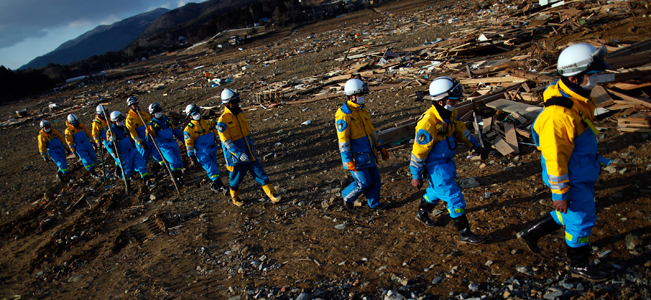
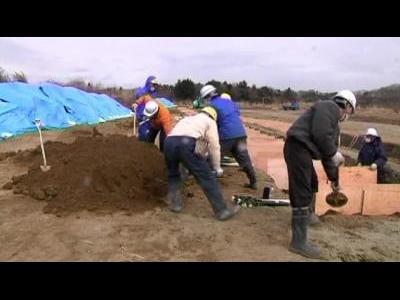
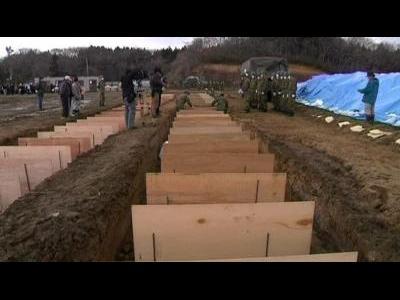
With supplies of fuel and ice dwindling, officials have abandoned the traditional practice of cremation in favor of quick, simple burials. Some are interred in bare plywood caskets and others in blue plastic tarps, with no time to build proper coffins. The bodies will be dug up and cremated once crematoriums catch up with the glut, officials assured families.

In Higashimatsushima in Miyagi prefecture, about 200 miles (320 kilometers) northeast of Tokyo, soldiers lowered plywood coffins into the ground, saluting each casket.

Some relatives placed flowers on the graves. Most remained stoic, folding hands in prayer. Two young girls wept inconsolably, hugged tightly by their father.

"I hope their spirits will rest in peace here at this temporary place," said mourner Katsuko Oguni, 42.

Masaru Yamagata, a Higashimatsushima official, said the crematorium cannot keep up with demand.

"Giving the grieving families coffins is the most we can do right now," Yamagata said. "Every day, more dead bodies are found, and we need more coffins quickly."

Hundreds of thousands remained homeless, squeezed into temporary shelters without heat, warm food or medicine and no idea what to call home after the colossal wave swallowed up communities along the coast.

The tsunami also heavily damaged the Fukushima Dai-ichi nuclear facility, with explosions and fires in four of the plant's six reactors sending radioactive steam into the air.

Progress in cooling down the troubled plant has been intermittent, disrupted by rises in radiation, elevated pressure in reactors and overheated storage pools.

The plant's operator had restored circuitry to bring power to all six units and turned on lights at Unit 3 late Tuesday for the first time since the disaster — a significant step toward restarting the cooling system.

It had hoped to restore power to cooling pumps at the unit within days, but experts warned the work included the risk of sparking fires as electricity is restored through equipment potentially damaged in the tsunami.

And then on Wednesday, black smoke suddenly billowed from Unit 3, prompting another evacuation of workers from the plant in the afternoon, Tokyo Electric Power Co. officials said. They said there had been no corresponding spike in radiation at the plant.

Hidehiko Nishiyama of the Nuclear and Industrial Safety Agency said officials did not know the reason for the smoke.

Tokyo Electric manager Teruaki Kobayashi said the pump for Unit 3 had been tested and was working Wednesday. But officials weren't sure when they would be able to turn the power on to the pump.

Nuclear agency official Kenji Kawasaki said workers would not be allowed to return to the plant until Thursday morning, since smoke was still rising as of late Wednesday night.

As a precaution, officials have evacuated residents within 12 miles (20 kilometers) of the plant and advised those up to 19 miles (30 kilometers) away to stay indoors to minimize exposure.

And for the first time, Edano, the chief Cabinet secretary, suggested that those downwind of the plant should stay indoors with the windows shut tight — even if just outside the zone.

  • Japan hit by huge earthquake, tsunami Slideshow:Japan hit by huge earthquake, tsunami
  • Japan Water Supply a Health Threat? Play Video Video:Japan Water Supply a Health Threat? ABC News
  • Hopes dim for tsunami victims' family Play Video Video:Hopes dim for tsunami victims' family AFP
  • ___

    Associated Press writers Tomoko A. Hosaka, Yuri Kageyama and Jay Alabaster in Tokyo, Tim Sullivan in Higashimatsushima, Mary Clare Jalonick in Washington, Lindsey Tanner in Chicago and Foster Klug in Seoul, South Korea, contributed to this report.


    http://news.yahoo.com/s/ap/20110323/ap_on_bi_ge/as_japan_earthquake

    Yemeni parliament gives president emergency powers


    Yemeni army soldiers in charge of protecting anti-government protestors, take a break after receiving flowers from demonstrators, not pictured, demand AP – Yemeni army soldiers in charge of protecting anti-government protestors, take a break after receiving …

    SANAA, Yemen – Yemen's parliament enacted sweeping emergency laws Wednesday after the country's embattled president asked for new powers of arrest, detention and censorship to quash a popular uprising demanding his ouster.

    The move escalates the showdown between Ali Abdullah Saleh and the movement that has unified military commanders, religious leaders and protesting youth in demands for his immediate departure.

    The state of emergency suspends the constitution, allows media censorship, bars street protests and gives security forces 30 days of far-reaching powers to arrest and detain suspects without judicial process.

    Youth leaders at the Sanaa square that has become the epicenter of the protests dismissed the move.

    "It is the revolution that now decides the future of the nation," said Jamal Anaam, one of the protests' leaders. We pay no attention to the measures."

    The accelerating conflict has raised fears that Yemen could be pushed into even greater instability.

    Rival factions of the military have deployed tanks in the capital, Sanaa — with units commanded by one of Saleh's son protecting the president's palace, and units loyal to a top dissident commander protecting the protesters.

    The White House has been reluctant to weigh in on the situation in Yemen, except to urge an end to violence. The Obama administration appears to be trying to avoid choosing between an increasingly unpopular Saleh and an opposition that Washington doesn't fully understand and could be hostile to U.S. efforts in Yemen.

    The adoption of the state of emergency was a virtual certainty because Saleh's ruling party dominates the 301-seat legislature. Opposition and independent legislators stayed away from Wednesday's parliamentary session along with dozens of lawmakers from Saleh's own ruling party. Parliament said more than 160 lawmakers were present Wednesday.

    There was no breakdown available of the vote, which was done by a show of hands amid chaotic scenes. Some dissident lawmakers questioned whether the chamber had the necessary 151 members present when it voted, arguing that only about 130 legislators were there.

    "The vote is illegitimate," said independent lawmaker Abdul-Razzak al-Hijri.

    Saleh, who has worked closely with a U.S.-offensive against the Yemeni branch of al-Qaida, has already dramatically increased his crackdown on anti-government demonstrators, with his security forces shooting dead more than 40 protesters on Friday in Sanaa.

    On Tuesday he offered to step down by the year's end, but the opposition rejected his offer.

    He also warned that the country would slide into civil war following the defection of senior army commanders to the opposition.

    Tribal leaders, diplomats, lawmakers, provincial governors and newspaper editors have also joined the opposition.

    Saleh, who has ruled Yemen for 32 years, also called Tuesday for a dialogue with the leaders of the youth movements leading the protests at the central Sanaa square that has been renamed Taghyeer, or change.

    The defection on Monday of that commander, Maj. Gen. Ali Mohsen al-Ahmar, a powerful regime insider who commands the army's powerful 1st Armored Division, has been seen by many as a major turning point toward a potentially rapid end for Saleh's nearly 32-year rule. He is also a member of Saleh's Hashid tribe.

    Clashes broke out late Monday between Saleh's Republican Guard troops and dissident army units in the far eastern corner of the country. On Tuesday, Republican Guard tanks surrounded a key air base in the western Red Sea coastal city of Hodeida after its commander — Col. Ahmed al-Sanhani, a member of Saleh's own clan — announced he was joining the opposition.

    The turmoil raised alarm in Washington, which has heavily backed Saleh to wage a campaign against a major Yemen-based al-Qaida wing that plotted attacks in the United States.

    U.S. Defense Secretary Robert Gates, on a trip to Russia, said Tuesday that "instability and diversion of attention" from dealing with al-Qaida is a "primary concern about the situation." He refused to weigh in on whether Saleh should step down.

    Anti-Government Demonstrations in Yemen Slideshow:Anti-Government Demonstrations in Yemen

    http://news.yahoo.com/s/ap/20110323/ap_on_re_mi_ea/ml_yemen

    What is acute radiation syndrome?


    Contribute content like this. Start here.

    A military helicopter drops water on the reactors at the Fukushima Daiichi nuclear plant in this still image taken from video footage Reuters – A military helicopter drops water on the reactors at the Fukushima Daiichi nuclear plant, March 17, 2011. …

    Japan's Fukushima nuclear plant was crippled after a devastating earthquake and tsunami struck Japan. Fears of radiation poisoning fueled the government to try to prevent exposure by the distribution of iodine.

    According the Centers for Disease Control and Prevention, acute radiation syndrome (ARS), known also as radiation poisoning or radiation sickness, is a serious disease, which can occur any time the body is exposed to very high doses of ionizing radiation in a short time frame. The degree to which you may experience symptoms correlates directly to the amount of radiation absorbed by your body. Here are some facts on acute radiation syndrome.

    * In order to develop acute radiation syndrome the radiation must penetrate the body to reach your internal organs. Radiation from X-rays and medical procedures such as CT scans are typically too low to cause this, although cancer treatment radiation may possibly be in high enough doses to create symptoms.

    * To develop ARS, you must have been exposed to the radiation in a short amount of time, within minutes, and your whole body must have received the exposure.

    * Symptoms begin within minutes to days after exposure and they include nausea, vomiting and diarrhea. These can last for several minutes or several days and may be intermittent.

    * After the initial symptoms wear off, you may feel like you have recovered and then you will get, sick again, this time more seriously, with symptoms of fever, fatigue, loss of appetite, vomiting and diarrhea. You may even develop seizure and coma. This stage can last much longer, up to several months.

    * Damage to your skin can appear within a few hours after exposure and may last a few weeks to a few years, depending on the severity of the dose of radiation exposure. Symptoms include swelling and itching and a burn similar to severe sunburn. Hair loss may accompany these symptoms.

    * Death can occur and the probabilities depend upon the amount of radiation received. If death occurs as a result of ARS, in most cases, it is within a few months of exposure, due to bone marrow destruction, infection and bleeding.

    * Survivors of ARS may continue to deal with symptoms up to two years after exposure.

    * Treatment consists of preventing further contamination, reducing symptoms, treating organs that have been damaged and controlling pain.

    * Decontamination is a process that removes external contamination by radioactive particles. Removal of clothing and shoes accomplishes this by removing approximately 90 percent of contamination. Washing your skin will also aid in further removal of any radioactive particles.

    Margie Miklas is a critical-care nurse with more than 30 years experience. She currently works in south Florida in a cardiovascular ICU with a specialty certification in cardiac surgery.

  • Japan's Fukushima Nuclear Plant Slideshow:Japan's Fukushima Nuclear Plant
  • Vigil For Japan at UN Church Center Play Video Earthquakes Video:Vigil For Japan at UN Church Center FOX News
  • Japan tribute Play Video Earthquakes Video:Japan tribute CBC.ca
  • Note: This article was written by a Yahoo! contributor. Join the Yahoo! Contributor Network to start publishing your own articles.


    http://news.yahoo.com/s/ac/20110312/hl_ac/8049004_facts_about_acute_radiation_syndrome

    What is radioactive iodine poisoning and how is it treated?


    Contribute content like this. Start here.

    Tokyo water unsafe for babies, food bans imposed AFP/TEPCO VIA JIJI PRESS – Workers spray water to cool down the spent nuclear fuel in the fourth reactor building at Fukushima No.1 …

    In the aftermath of the 9.0-magnitude earthquake and the tsunami that caused massive destruction, Japan now faces the threat of nuclear radiation exposure. The fear of a meltdown at the Fukushima Daiichi plant raises health questions about the radiation risk and long-term effects on the population exposed.

    Radioactivity can be carried by the wind, as seen in 1986 at Chernobyl in the former Soviet Union. It has been found that thyroid cancers were diagnosed at Chernobyl since the accident due to the intake of the radioactive iodine fallout.

    Nausea and vomiting are the first symptoms of radioactive iodine poisoning. About a month later, victims may develop low blood pressure, hair loss, more vomiting, fatigue, dizziness, infection and an inability to heal. Long-term effects include cancer and teratogenic mutations to fetuses exposed to radiation. These include smaller brain size, poorly formed eyes, abnormally slow growth and mental retardation.

    What is radioactive iodine (I-131)?

    Radiation poisoning damages organs and other tissues. Radioactive iodine released into the air gets into the lungs and may also contaminate the local food supply. Farm animals and agriculture all are contaminated by radiation creating increased radiation exposure for years to come. This internal contamination with radioactive iodine causes the thyroid gland to quickly absorb the radioactive iodine. Taking potassium iodine pills helps to prevent thyroid cancer.

    What is KI (potassium iodide)?

    Potassium Iodide (KI) is needed by the body to make thyroid hormones. The goal with taking the pills is to saturate the thyroid with healthy iodine to shield the thyroid from radioactive iodine. Taken an hour before known fallout, KI pills block the radioactive iodine to protect the thyroid gland, thus preventing cancer in the future. It only protects the thyroid, no other parts of the body. Children are the most sensitive to radioactive iodine. Iodine crosses the placenta and KI protects the growing fetus.

    KI comes in a liquid or tablet form. According to the FDA, adults and breastfeeding women should take 130mg. Children between 3 and 18 years of age should take 65mg if under 150 pounds. Infants and children younger than 3 should take 32mg. A newborn's dose is 16 mg. A single dose of KI protects the thyroid gland for 24 hours. Usually one dose is all that is required unless radioactive iodine lingers longer in the environment. KI should be administered before a radioactive cloud, but can be taken three to four hours after exposure.

    If you are allergic to iodine, have thyroid disease or a shellfish allergy KI may be harmful. Side effects include intestinal discomfort, allergic reaction, rashes, and inflammation of the salivary glands. Prevent radioactive vapor or dust from entering the lungs and the digestive tract.

    Protecting the public, precautions for those at risk

    In addition to taking potassium iodide pills, an important deterrent to reduce or eliminate internal contamination from I-131 is to find an alternate source of food outside the contamination zone. I-131 falls on vegetation and pastures where cows feed contaminating their milk. Other contaminates are from the air, eating eggs and leafy vegetables. Cleanse skin with lukewarm water and a mild soap such as Ivory, Dove, and Neutrogena and do not rub your skin. Do not use table salt as a substitute for KI; it does not contain enough iodine to block radioactive iodine from reaching your thyroid gland.

    Terry Doire has been a registered nurse with more than 30 years' experience in various areas of health care. She's presently working as an Outreach Coordinator for Acute Care Inpatient Rehabilitation Center in Florida.

  • Japan hit by huge earthquake, tsunami Slideshow:Japan hit by huge earthquake, tsunami
  • Quake victims buried in mass graves Play Video Earthquakes Video:Quake victims buried in mass graves Reuters
  • Japan quake serves as reminder for California Play Video Earthquakes Video:Japan quake serves as reminder for California AP
  • Note: This article was written by a Yahoo! contributor. Join the Yahoo! Contributor Network to start publishing your own articles.


    http://news.yahoo.com/s/ac/8063026_potassium_iodide_info_what_is_radioactive_iodine_and_how_is_it_treated

    Unsure future for city in shadow of nuclear plant


    Retiree Miyoko Sato, left, recalls the tsunami wave with a visiting neighbor, Wednesday, March 23, 2011 in Soma, Fukushima prefecture, Japan. Soma sit AP – Retiree Miyoko Sato, left, recalls the tsunami wave with a visiting neighbor, Wednesday, March 23, 2011 …


    SOMA, Japan – Hidekatsu Sato stands in the doorway of his gutted house and looks out impassively at the sea as it laps up against the harbor wall just a few meters away. Born and raised here, he went to Tokyo to work as a plumber, then returned a few years ago to live out his retirement years.

    "I came back here to die, and that's still my plan," the grizzled 73-year old said. "I'm not leaving."

    With radiation leaking from a nuclear power plant near his city, he may not have that choice.

    Jutting out into the Pacific Ocean on Japan's devastated northeastern coast, Soma — population 38,000 — is a microcosm of the calamity that befell this country on March 11. Like dozens of other towns, Soma bore the full force of the earthquake, then was inundated by the towering tsunami that raced in behind it.

    [Related: What is radioactive iodine poisoning?]

    Now, it is struggling to cope with the unfolding crisis at the nearby Fukushima Dai-ichi nuclear complex.

    Soma sits in the shadow of the crippled facility that was badly damaged by the tsunami and has been leaking radioactivity into the air and sea and has forced tens of thousands of people to flee or hunker down indoors. Local crops and milk are contaminated, and there are fears that the future may hold more hardship than anyone here has ever known.

    "I've never had much, and I don't need much," Sato said. "But I just don't know how this is ever going to end."

    Even without the concerns over radioactivity, it is hard to imagine what is ahead for Soma.

    Its harbor, once a popular destination for sport fishermen and tourists, smells of death.

    Rotting fish are strewn across the one main street that has been cleared enough to allow emergency vehicles through. Clams and crabs intended for sale on what everyone expected would be just another ordinary day are mixed in with the piles of timber and debris that were once people's homes, stores and schools.

    Sato saw it all.

    "It was like a freeway, everything was moving so fast," he said of the powerful wave. "Houses, boats, trucks — they all just flew by on the water. I escaped from my house to a little hill out back. We haven't seen anything like this for generations."

    But Sato says it is what he can't see now that scares him the most.

    "We Japanese grow up hearing stories about the horrors of radiation, about Hiroshima and Nagasaki," he said. "We, as a people, have a special fear of radiation. It's just so mysterious. It causes an irrational fear. We don't know what to think."

    Shortly after the damage to the Fukushima plant became apparent, the government issued an evacuation order for all residents within a 6-mile (10-kilometer) radius of the six reactors, which provide a major source of power for millions of people in Tokyo.

    [Related: What is acute radiation syndrome?]

    That zone later became 12 miles (20 kilometers), and residents in an added ring of 6 more miles (10 more kilometers) were told to stay indoors. A flood of evacuees soon began streaming into Soma, which is just outside both rings.

    "We are now taking in several hundred people from those areas," said Katsuhiro Abe, a Soma city official. "That's on top of about 2,000 of our own people who have no homes."

    Abe stressed that — as far as the government's assessment goes — Soma, which is about 25 miles (40 kilometers) away from the nuclear facility, is safe. Radiation levels are below what would be considered an immediate health risk.

    Abe said the invisible threat bearing down on the city came as a surprise.

    Soma was reasonably well-prepared for an earthquake. The size of the tsunami was more unexpected, but officials had been trained in how to respond if one hit. The nuclear crisis, however, caught them off guard. Abe said the city is now ready to evacuate everyone again if the situation at the plant deteriorates.

    "We are watching the developments at the reactors with extreme caution, and we are preparing for the worst," he said. "It is a constant fear that we all must consider, but we must do so calmly."

    Still, he said the nuclear crisis has added another layer of complexity to a natural disaster that was overwhelming in its own right.

    "If it weren't for the nuclear plants, we could focus on our recovery," Abe said. "But we don't know how this is going to play out. People from outside are afraid to come in to bring us the supplies that we desperately need. Convincing truck drivers or others that it is safe now, right here, has been a big obstacle for us. People just don't want to go anywhere near the reactors."

    "And if we can't sell our produce, like seaweed and rice, we are doomed," he added.

    Back on the waterfront, Sato and his neighbors are mostly left to fend for themselves.

    They have no water, no power, no gas. They must travel to evacuation centers to get food — usually just one rice ball a day. Most stay with family nearby on higher ground at night, then return to the shore to go through the motions of cleaning up, though it is a huge task.

    As a light snow falls, port worker Mitsuyoshi Abe stands out in front of his wife's two-chair hair salon. He has a cigarette while he considers what to do. Although the building is still standing, the damage was so severe that Abe at first had no idea of where to start.

    "Now it's all starting to look normal," he said. "I'm getting used to the devastation."

    Abe said his house isn't his primary worry. It can be rebuilt.

    "What gets me is that I feel we were sacrificed. We are the ones living next to these reactors, so that people in Tokyo can have the conveniences they are accustomed to. Everybody wants electricity, and I suppose this is the age we live in," he said. "But the nuclear plants really messed us up. We can't start thinking about our future until their situation is cleaned up."

    Farther down the road, Toshiaki Kikuchi, 63, comes back every day to the eight-room inn he ran with his wife, Chimiko, because he says it just feels better to be at home — despite the broken pipes shooting water onto the street, the blanket of black mud and the 40-foot fishing boat and several cars and trucks that were tossed right up against the inn's front gate.

    "I have nothing to complain about," Kikuchi said. "I'm alive. Look at all the destruction around us. I have it good."

    Then he paused.

    "I have what I need," he said. "But what we don't have is a future."

    Japan buries its dead as radiation fears grow Play Video AP – Japan buries its dead as radiation fears grow


    http://news.yahoo.com/s/ap/20110323/ap_on_re_as/as_japan_nuclear_shadow

    Germany set to abandon nuclear power for good


    FILE - In this March 18, 2011 file photo, a traffic sign stands next to the nuclear power plant of Biblis, Germany. Germany stands alone among the wor AP – FILE - In this March 18, 2011 file photo, a traffic sign stands next to the nuclear power plant of Biblis, …

    BERLIN – Germany is determined to show the world how abandoning nuclear energy can be done.

    The world's fourth-largest economy stands alone among leading industrialized nations in its decision to stop using nuclear energy because of its inherent risks. It is betting billions on expanding the use of renewable energy to meet power demands instead.

    The transition was supposed to happen slowly over the next 25 years, but is now being accelerated in the wake of Japan's Fukushima Dai-ichi nuclear plant disaster, which Chancellor Angela Merkel has called a "catastrophe of apocalyptic dimensions."

    Berlin's decision to take seven of its 17 reactors offline for three months for new safety checks has provided a glimpse into how Germany might wean itself from getting nearly a quarter of its power from atomic energy to none.

    And experts say Germany's phase-out provides a good map that countries such as the United States, which use a similar amount of nuclear power, could follow. The German model would not work, however, in countries like France, which relies on nuclear energy for more than 70 percent of its power and has no intention of shifting.

    "If we had the winds of Texas or the sun of California, the task here would be even easier," said Felix Matthes of Germany's renowned Institute for Applied Ecology. "Given the great potential in the U.S., it would be feasible there in the long run too, even though it would necessitate huge infrastructure investments."

    Nuclear power has been very unpopular in Germany ever since radioactivity from the 1986 Chernobyl disaster drifted across the country. A center-left government a decade ago penned a plan to abandon the technology for good by 2021, but Merkel's government last year amended it to extend the plants' lifetime by an average of 12 years. That plan was put on hold after the March 11 earthquake and tsunami compromised nuclear power plants in Japan, and is being re-evaluated as the safety of all of Germany's nuclear reactors is being rechecked.

    Germany currently gets 23 percent of its energy from nuclear power — about as much as the U.S. Its ambitious plan to shut down its reactors will require at least euro150 billion ($210 billion) investment in alternative energy sources, which experts say will likely lead to higher electricity prices.

    Germany now gets 17 percent of its electricity from renewable energies, 13 percent from natural gas and more than 40 percent from coal. The Environment Ministry says in 10 years renewable energy will contribute 40 percent of the country's overall electricity production.

    The government has been vague on a total price tag for the transition, but it said last year about euro20 billion ($28 billion) a year will be needed, acknowledging that euro75 billion ($107 billion) alone will be required through 2030 to install offshore wind farms.

    The president of Germany's Renewable Energy Association, Dietmar Schuetz, said the government should create a more favorable regulatory environment to help in bringing forward some euro150 billion investment in alternative energy sources this decade by businesses and homeowners.

    Last year, German investment in renewable energy topped euro26 billion ($37 billion) and secured 370,000 jobs, the government said.

    After taking seven reactors off the grid last week, officials hinted the oldest of them may remain switched off for good, but assured consumers there are no worries about electricity shortages as the country is a net exporter.

    "We can guarantee that the lights won't go off in Germany," Environment Ministry spokeswoman Christiane Schwarte said.

    Most of the country's leaders now seem determined to swiftly abolish nuclear power, possibly by 2020, and several conservative politicians, including the chancellor, have made a complete U-turn on the issue.

    Vice Chancellor Guido Westerwelle said Wednesday "we must learn from Japan" and check the safety of the country's reactors but also make sure viable alternatives are in place.

    "It would be the wrong consequence if we turn off the safest atomic reactors in the world, and then buy electricity from less-safe reactors in foreign countries," he told the Passauer Neue Presse newspaper.

    But Schuetz insists that "we can replace nuclear energy even before 2020 with renewable energies, producing affordable and ecologically sound electricity."

    But someone will have to foot the bill.

    "Consumers must be prepared for significantly higher electricity prices in the future," said Wolfgang Franz, head of the government's independent economic advisory body. Merkel last week also warned that tougher safety rules for the remaining nuclear power plants "would certainly mean that electricity gets more expensive."

    The German utilities' BDEW lobby group said long-term price effects could not be determined until the government spells out its nuclear reduction plans. Matthes' institute says phasing out nuclear power by 2020 is feasible by better capacity management and investment that would only lead to a price increase of 0.5 cents per kilowatt-hour.

    In Germany, the producers of renewable energy — be it solar panels on a homeowner's rooftop or a farm of wind mills — are paid above-market prices to make sure their investment breaks even, financed by a 3.5 cents per kilowatt-hour tax paid by all electricity customers.

    For a typical German family of four who pay about euro1,000 ($1,420) a year to use about 4,500 kilowatt-hours, the tax amounts to euro157 ($223).

    The tax produced euro8.2 billion ($11.7 billion) in Germany in 2010 and it is expected to top euro13.5 billion ($19.2 billion) this year. The program — which has been copied by other countries and several U.S. states such as California — is the backbone of the country's transition toward renewable energies.

    "Our ideas work. Exiting the nuclear age would also be possible in a country like the U.S.," Schuetz said.

    Another factor likely to drive up electricity prices is that relying on renewable energies requires a huge investment in the electricity grid to cope with more decentralized and less reliable sources of power. Economy Minister Rainer Bruederle just announced legislation to speed up grid construction but gave no cost estimate.

    And even if non-nuclear power is more expensive, Germans seeing images daily of Japan's crippled Fukushima nuclear complex seem willing to pay the higher price.

    Ralph Kampwirth, spokesman for Lichtblick AG, Germany's biggest utility offering electricity exclusively from renewable sources, said since the Fukushima disaster it has been getting nearly three times more new clients than normal, up from 300 to more than 800 per day, despite prices slightly above average.

    Sticking with nuclear power would also have its costs and require public funds.

    The only two new nuclear reactors currently under construction in Europe, in France and in Finland, both have been plagued by long delays and seen costs virtually doubling, to around euro4 billion ($5.7 billion) and euro5.3 billion ($7.5 billion) respectively.

    The disposal of spent nuclear fuel is also a costly problem, but it has no set price tag in Germany because the government has failed to find a sustainable solution.

    Many decades-old reactors are highly profitable as their initial cost has been written off, but they now face higher costs as regulators push for safety upgrades in the wake of the Fukushima disaster. One of the most pressing — and costly — requirements is likely to be a mandatory upgrade to reinforce all nuclear power plants' outer shell to withstand a crash of a commercial airliner.

    Utility EnBW pulled the plug for good on one reactor temporarily shut down by the government because the new requirements made operating it "no longer economically viable."

    But even if Germany abandons nuclear energy, some of Europe's 143 nuclear reactors will still sit right on its borders.

    Since France and other nations are firmly committed to nuclear power, shutting down all reactors across Europe won't happen, but Merkel is now pushing for common safety standards. The topic will be discussed at the European Union summit in Brussels on Thursday and Friday.

    Merkel said the 27-nation bloc, which has standardized "the size of apples or the shape of bananas," needs joint standards for nuclear power plants.

    "Everybody in Europe would be equally affected by an accident at a nuclear power plant in Europe," Merkel said.


    http://news.yahoo.com/s/ap/20110323/ap_on_bi_ge/eu_germany_abandoning_nuclear_power

    Screen icon Elizabeth Taylor passes away

    Actress Elizabeth Taylor in the film "Butterfield 8" in 1961 (Courtesy Everett Collection)

    Film legend Elizabeth Taylor dies at 79 (AP)

    1 hour, 10 minutes ago

    FILE - This 1961 file photo shows actress Elizabeth Taylor in the film 'Butterfield 8' in 1961. Publicist Sally Morrison says the actress died Wednesday, March 23, 2011 in Los Angeles of congestive heart failure at age 79. (AP Photo/File)

    LOS ANGELES - Screen legend Elizabeth Taylor, the violet-eyed film goddess whose sultry screen life was often upstaged by her stormy personal life, died Wednesday at age 79.

    She died of congestive heart failure at Cedars-Sinai Medical Center, where she had been hospitalized for about six weeks, publicist Sally Morrison said.

    "All her children were with her," Morrison said.

    Taylor had extraordinary grace, fame and wealth, and won three Oscars, including a special one for her humanitarian work. But she was tortured by ill health, failed romances and personal tragedy.

    "I think I'm becoming fatalistic," she said in 1989. "Too much has happened in my life for me not to be fatalistic."

    Her eight marriages — including two to actor Richard Burton — and a lifelong battle with substance abuse, physical ailments and overeating made Taylor as popular in supermarket tabloids as in classic film festivals.

    Taylor disclosed in November 2004 that she had congestive heart failure. But she still periodically dismissed reports that she was at death's door, saying she used a wheelchair only because of chronic back problems that began at age 12 when she fell from a horse.

    "Oh, come on, do I look like I'm dying?" she said in May 2006 in a rare television interview on CNN's "Larry King Live." "Do I look like or sound like I have Alzheimer's?" Tabloids report such things "because they have nothing else dirty to write about anybody else," she said.

    When she turned 75 the following year, she was asked about the secret to her longevity and quipped: "Hangin' in."

    The London-born actress was a star at age 12, a bride and a divorcee at 18, a screen goddess at 19 and a widow at 26.

    She appeared in more than 50 films, and won Oscars for her performances in "Butterfield 8" (1960) and "Who's Afraid of Virginia Woolf?" (1966), in which she starred opposite Burton.

    In later years, she was a spokeswoman for several causes, most notably AIDS research. Her work gained her a special Oscar, the Jean Hersholt Humanitarian Award, in 1993.

    As she accepted it, she told a worldwide television audience: "I call upon you to draw from the depths of your being — to prove that we are a human race, to prove that our love outweighs our need to hate, that our compassion is more compelling than our need to blame."

    She accepted her many health problems with a stoic attitude.

    "My body's a real mess," Taylor told W magazine in 2004. "If you look at it in the mirror, it's just completely convex and concave."


    http://movies.yahoo.com/news/movies.ap.org/film-legend-elizabeth-taylor-dies-79-ap

    Eskay: 'Saya dalam video itu'

    Eskay: 'Saya dalam video itu'
    Jimadie Shah Othman
    Mac 23, 11
    4:59pm

    "Saya dalam video itu".

    Begitu pengakuan ahli perniagaan Datuk Shazryl Eskay Abdullah - yang sebelum ini dianggap sebagai Datuk T - apabila ditanya sama ada beliau yakin Datuk Seri Anwar Ibrahim merupakan orang dalam video seks yang ditayangkan kelmarin.

    NONEShazryl (kiri) yang mengakui bekas sahabat Anwar bagaimanapun enggan menjelaskan apakah peranannya ketika adegan itu berlaku.

    Beliau juga enggan mendedahkan di bahagian mana gambar beliau dilihat dalam rakaman itu kerana ia sudah menjadi kes polis.

    Menurut seorang pemberita yang menonton video itu, selain seorang wanita dan lelaki mirip Anwar, terdapat seorang lagi dilihat di permulaan video itu. Bagaimanapun, bahagian mukanya tidak kelihatan.

    Shazryl hari ini tampil dalam sidang media bersama bekas ketua menteri Melaka Tan Sri Rahim Thamby Chik bagi menjelaskan persoalan berhubung identiti Datuk T.

    Menariknya, Rahim menjelaskan, Datuk T bukanlah individu, sebaliknya merujuk kepada tiga kawan baik.

    "T ini (merujuk pada) trio, three," kata Rahim sambil menambah seorang lagi adalah Datuk Shuib Lazim yang juga bendahari Pertubuhan Pribumi Perkara PERKASA.

    Sahabat setiakawan

    Shuib bagaimanapun tidak hadir.

    Ditanya mengenai siapakah Datuk T yang sebelum ini dilaporkan masuk mengambil jam yang didakwa milik Anwar dalam bilik hotel, tempat adegan itu didakwa berlaku, Shazryl mengakui orang itu adalah dirinya.

    NONEBercakap dalam sidang media di sebuah hotel di ibu negara petang tadi, Rahim mendakwa mereka bertiga - yang disifatkan sebagai "sahabat setiakawan" - tampil mendedahkan video itu kepada media memandangkan Anwar merupakan pemimpin tinggi dalam politik negara.

    "Dia pemimpin tinggi, hendak jadi PM. Jadi kita mesti lihat akhlaknya," kata Rahim sambil mendakwa cuma mahu menegakkan kebenaran.

    Walaupun memperoleh video itu kira-kira dua minggu lalu, mereka berkata hanya menayangkannya kelmarin kerana baru menemui tempat yang sesuai, dengan mempertimbangkan aspek "keselamatan".

    Shazryl mengakui menyimpan video "tunggal" itu anakala Rahim pula mengaku menguruskan tempat tayangannya di sebuah hotel mewah di ibu negara.


    http://malaysiakini.com/news/159463

    'Datuk T' mahu s'jaya diraja siasat video seks

    'Datuk T' mahu s'jaya diraja siasat video seks
    Jimadie Shah Othman
    Mac 23, 11
    4:45pm

    Bekas ketua menteri Melaka Tan Sri Rahim Thamby Chik - yang mengakui antara tiga orang di sebalik penayangan video seks - mahu suruhanjaya diraja ditubuhkan bagi menentukan ketulenan klip itu.

    Katanya, suruhanjaya itu perlu turut dianggotai tiga ketua parti pembangkang pembangkang, termasuk Presiden PKR Datuk Seri Dr Wan Azizah Wan Ismail, Presiden PAS Datuk Seri Abdul Hadi Awang dan Setiausaha Agung DAP Lim Guan Eng.

    NONETurut hadir di sidang akhbar yang diadakan secara tergesa-gesa di ibu negara itu, seorang lagi anggota 'Datuk T' - singkatan bagi perkataan "Trio " - ialah ahli perniagaan Shazryl Eskay Abdullah.

    Aggota ketiga - bendahari Pertubuhan Pribumi Perkara (PERKASA) dan bekas senator, Datuk Shuib Lazim - tidak hadir.

    Video seks selama 20 minit itu memaparkan seorang lelaki melakukan aksi seks dengan seorang wanita dalam sebuah bilik hotel.

    Suami Dr Wan Azizah yang juga ketua pembangkang, Datuk Seri Anwar Ibrahim menafikan beliau sebagai lelaki dalam video tersebut.

    Kerjasama apa sahaja

    Sementara itu, Rahim mencadangkan anggota lain suruhanjaya diraja itu boleh melibatkan pemimpin NGO, peguam negara, pengamal media dan wakil negara luar.

    "Semua ini supaya kebenaran yang ditemui nanti tidak boleh dipersoal," kata Rahim.

    azlanDalam masa yang sama, Abdul Rahim meminta Anwar yang sering dirujuknya sebagai "si fulan itu" menimbang meletak jawatan seperti yang dilakukannya sebelum ini ketika berdepan dakwaan tuduhan melakukan hubungan seks dengan gadis bawah umur pada 1994.

    Abdul Rahim menegaskan, beliau meletak jawatan kerana dianggap sebagai beban kepada parti walaupun mahkamah memutuskan beliau tidak bersalah.

    Sementara itu, mereka juga memberitahu akan memberikan kerjasama penuh kepada pihak polis yang menyiasat perkara itu.

    "Kita akan berikan apa sahaja kepada pihak polis. Seluar dalam (sendiri) pun kita akan beri kalau dia mahu," selorohnya sambil disambut gelak ketawa pemberita dalam dan luar negara.

    Sidang media itu menarik perhatian kira-kira 50 wakil media dari dalam dan luar negara hadir membuat liputan walaupun mendapat notis di saat-saat akhir.


    http://malaysiakini.com/news/159461

    Johari Abdul didakwa minta RM7j untuk MP Pakatan

    Jimadie Shah Othman
    Mac 23, 11
    6:17pm

    Tuduh menuduh ekoran penayangan video seks yang dikaitkan dengan Datuk Seri Anwar Ibrahim, berpanjangan apabila pemimpin PKR pula didakwa mahukan RM100,000 sebagai "pelincir" untuk membawa lebih ramai ahli parlimen Pakatan Rakyat menonton video itu.

    NONEAhli perniagaan Datuk Shazryl Eskay Abdullah (kiri) yang sebelum ini dianggap sebagai Datuk T mendakwa, ahli parlimen PKR, Datuk Johari Abdul membuat permintaan itu selepas menonton video kontroversi itu.

    Beliau juga mendakwa Johari meminta RM1 juta untuk setiap seorang bagi tujuh anggota parlimen yang akan dibawanya untuk menonton video itu, menjadikan jumlah keseluruhan yang perlu dibayar sebanyak RM7 juta.

    "Bila (permintaan sebegini) ini berlaku, kita pun buat keputusan tolak (permintaan Johari)," kata seorang lagi anggota Datuk T - bekas ketua menteri Melaka Tan Sri Rahim Thamby Chik.

    Seorang lagi anggota Datuk T atau Datuk Trio (bertiga) itu didakwa Datuk Shuaib Lazim. Beliau juga bendahari Pertubuhan Pribumi Perkasa Malaysia (PERKASA) bagaimanapun tidak hadir.

    Bercakap dalam sidang media di sebuah hotel di ibu negara bagi mendedahkan identiti Datuk T dan tujuan mereka menayangkan video kontroversi itu, Rahim menyifatkan dakwaan Johari pagi tadi sebagai "tohmahan" semata-mata.

    "YB ini yang kata, (video) itu benar. Ini si fulan itu, ini ketua PKR," dakwa Rahim mengulas kenyataan Johari yang mendakwa orang dalam video itu bukan Anwar.

    'Kamu akan serah video?'

    Menurut mereka, selain Johari dan wartawan, terdapat beberapa anggota parlimen yang dekat dengan mereka telah menonton video itu. Bagaimanapun identiti pihak terbabit tidak didedahkan.

    NONEPagi tadi, Johari mengakui terdapat percubaan menggunakan video seks sebagai umpan kepada ahli parlimen Pakatan, seperti didakwa Setiausaha Agung PKR Saifuddin Nasution dalam sidang media bersama mereka (kanan).

    Ditanya kenapa Johari dipanggil bagi menonton video itu, Shazryl menjelaskan, ia ekoran ahli jawatankuasa Majlis Pimpinan Pusat PKR itu merupakan anak saudara kepada Shuib.

    Sementara itu, Shazryl turut mendakwa terdapat usaha mendapatkan video "tunggal" tersebut oleh Presiden PKR Datuk Seri Wan Azizah Ismail yang juga isteri Anwar.

    Ditanya pemberita kenapa ia tidak diserahkan, Shazryl bertanya kembali: "Kalau kamu, kamu serah?"

    Seorang pemberita menjawab: "Tidak".

    "Tidak (akan serah pada Wan Azizah)," Shazryl cuma mengulang jawapan ringkas itu.


    http://malaysiakini.com/news/159474

    Wednesday, March 23, 2011

    Nazri: Jangan kaitkan Datuk T degan Umno

    Mac 23, 11 10:51pm

    Kumpulan Datuk T, yang memiliki video seks yang didakwa membabitkan pemimpin pembangkang, tidak ada kaitan dengan Umno, kata ahli Majlis Tertinggi Umno Datuk Seri Mohamed Nazri Aziz.

    Beliau berkata ini kerana tiga individu berkenaan bertindak atas kapasiti mereka sendiri dan langsung tiada kaitan dengan Umno.

    "Sebagai sebuah parti yang mempunyai tiga juta keahlian, jika ada salah seorang yang mempunyai niat dan motif tertentu, tiada apa yang boleh kita lakukan.

    "Perlu faham (bahawa) mereka buat semua itu atas (kapasiti) individu, jadi jangan kaitkan mereka ini dengan Umno," katanya kepada pemberita di pejabatnya di Parlimen hari ini.

    Beliau diminta mengulas mengenai bekas Ketua Menteri Melaka Tan Sri Abdul Rahim Thamby Chik, ahli perniagaan Datuk Eskay Shazryl Abdullah dan Bendahari Perkasa Datuk Shuib Lazim yang mengakui bahawa mereka adalah Datuk T atau "trio".

    - Bernama


    http://malaysiakini.com/news/159502

    Siasatan video seks, polis panggil wartawan, editor

    Mac 23, 11 10:42pm

    Polis telah memulakan siasatan terhadap sekumpulan individu yang mendakwa mempunyai rakaman video seks membabitkan seorang pemimpin pembangkang.

    Beberapa pengamal media telah dipanggil polis hari ini bagi membantu siasatan berhubung pendedahan video klip itu, yang ditayangkan untuk tontonan umum pihak media di Hotel Seri Carcosa di ibunegara Isnin lepas.

    Difahamkan mereka dipanggil untuk memberitahu secara terperinci mengenai tayangan klip itu yang ditayangkan oleh satu kumpulan Datuk T.

    Turut dipanggil ialah beberapa lagi wartawan kanan dan editor dari New Straits Times, The Star dan Malay Mail, yang juga merupakan kumpulan pertama melihat klip video berkenaan.

    Keterangan mereka diambil di sebuah Ibu Pejabat Polis di Kuala Lumpur.

    Siasatan itu dibuat ekoran laporan polis yang dibuat oleh Ketua Pembangkang Datuk Seri Anwar Ibrahim, semalam, yang menafikan bahawa dirinya adalah lelaki dalam video berkenaan.

    - Bernama


    http://malaysiakini.com/news/159501
    Related Posts Plugin for WordPress, Blogger...